Hollow WPC Decking Manufacturer

Hollow Composite Decking Boards

Source hollow WPC decking for distribution, private-label ranges and outdoor projects. Green Covering manufactures traditional and capped hollow deck boards with different chamber designs, profiles, colors and wood-grain finishes.
Round & Square ChambersTraditional & Capped BoardsWholesale, OEM & Projects

Send your application, preferred profile or size, quantity and destination. If you have not selected a board yet, we can recommend suitable options.
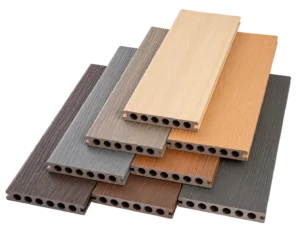
Hollow WPC decking boards and visible cut-end profiles
Hollow Decking at a Glance

What Is Hollow Composite Decking?

Hollow composite decking is a wood-plastic composite board manufactured with internal chambers rather than a completely solid cross-section. Compared with a similar solid profile, a hollow board normally uses less material and is lighter to move, load and install.

This combination makes hollow WPC decking a practical starting point for residential patios, gardens, landscape paths and distributor product ranges. The right board still depends on its dimensions, internal ribs, chamber layout, support spacing and installation method.

Material-efficient construction

Internal chambers can reduce material use while retaining a usable deck-board structure.

Easier handling

The lower weight of many hollow profiles can make boards easier to carry, cut and position.

Range flexibility

Combine traditional, capped, embossed and mixed-color options for different market positions.
Selection note: Actual board weight and suitability vary by model. Check the exact specification and installation guidance before ordering.
Representative Hollow WPC Decking Boards

Compare Confirmed Hollow Decking Profiles

These four models show several traditional and capped hollow-board directions. Reconfirm current cross-sections, surfaces, colors, lengths and commercial availability when requesting samples or pricing.
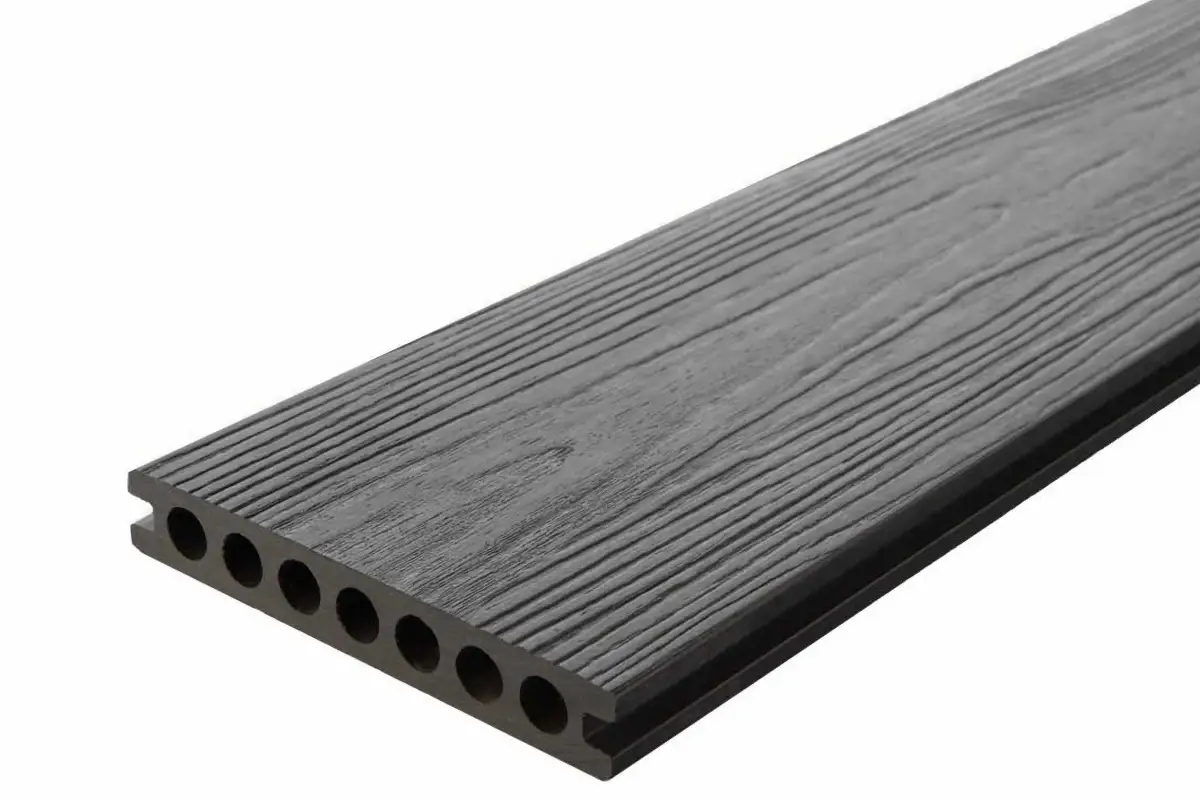
SMX145H21 145 by 21 mm traditional hollow composite decking profile
SMX143H22.5

Traditional Hollow Decking

143 × 22.5 mm
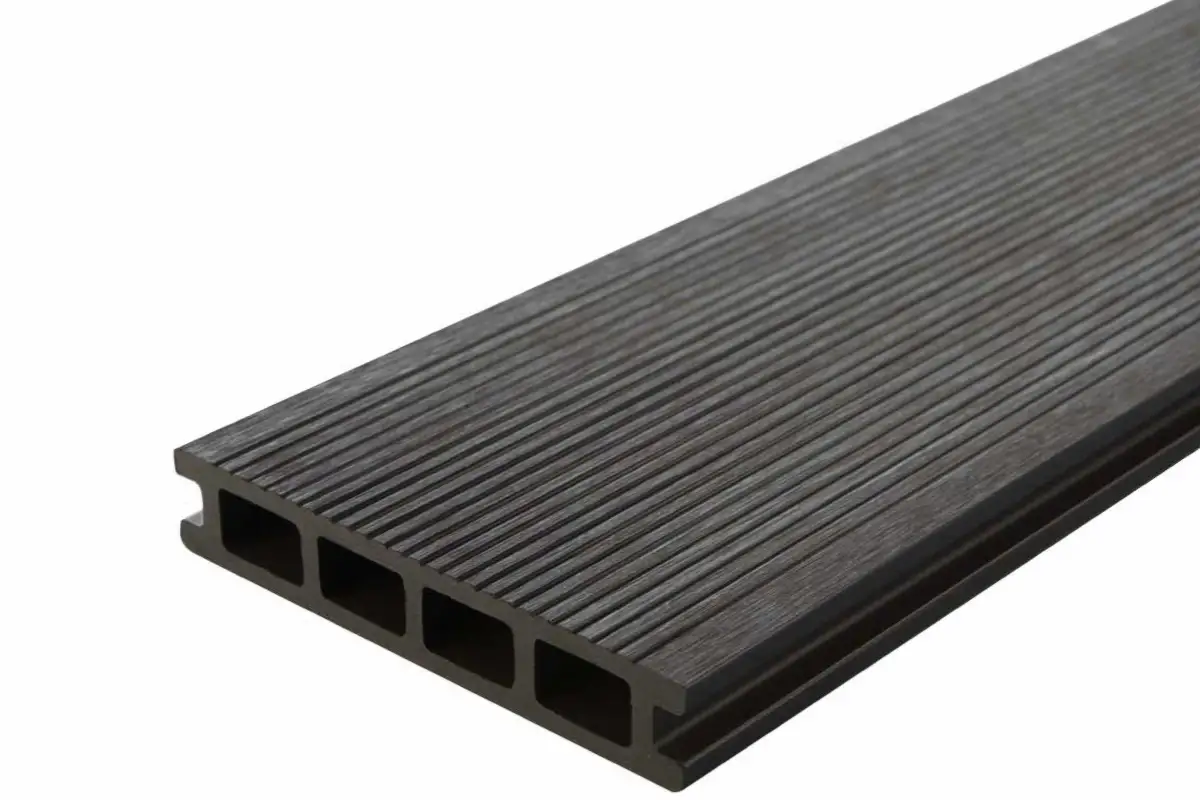
A material-efficient hollow composite decking board for patios, gardens and standard distribution ranges. Reversible surface directions are available within the current collection.
SMX140H25A 140 by 25 mm traditional hollow WPC decking profile

SMX140H25A

Traditional Hollow Decking

140 × 25 mm
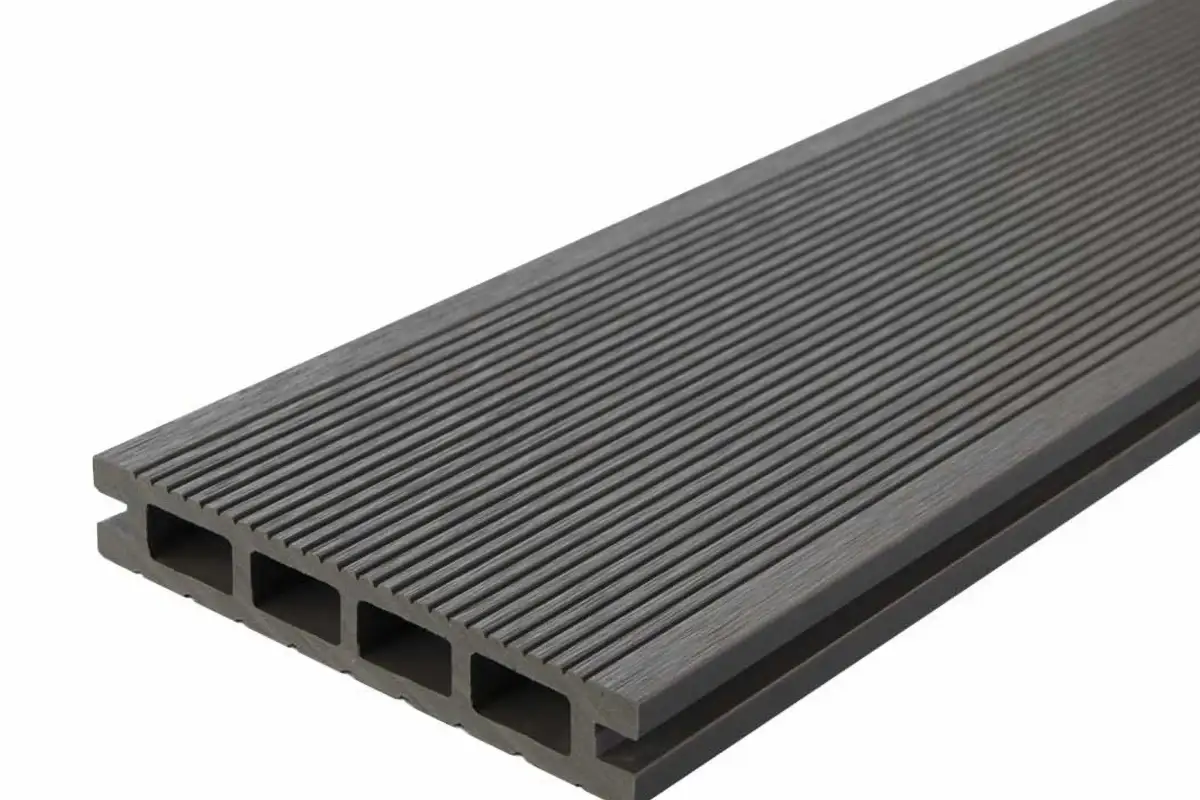
A 25 mm traditional hollow profile with reversible face options. Its familiar size makes it a practical board to compare for residential and general landscape applications.
SMX150H25B 150 by 25 mm traditional hollow deck board profile

SMX150H25B

Traditional Hollow Decking

150 × 25 mm
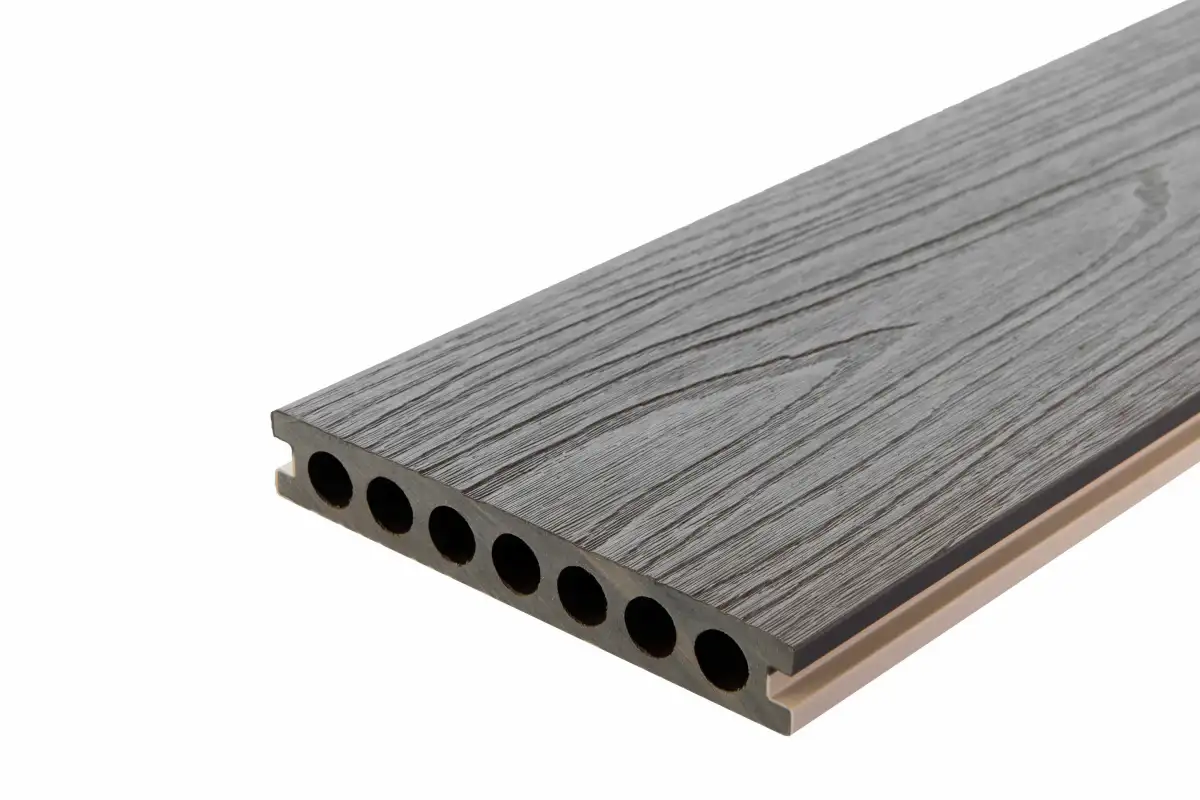
A wider traditional hollow board with two usable face directions. Compare its chamber design, finish and matched accessories with your target market or project requirement.
SMG150H23 150 by 23 mm capped hollow composite decking profile

SMG150H23

Capped Hollow Decking

150 × 23 mm
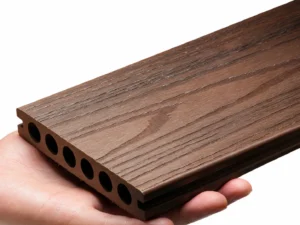
A capped hollow composite decking profile for buyers seeking enhanced surface protection together with hollow-core construction. Select the wood-grain, cap color and finish from the current capped range.
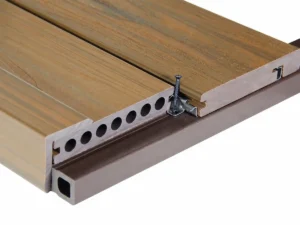
Hollow composite deck board cross-section showing walls ribs chambers and clip grooves
Inside a Hollow Deck Board

Chamber Shape Is Only Part of the Profile

Outer walls

The top, bottom and side walls form the board shell and work with the internal ribs.

Internal ribs

Ribs divide the chambers and support the board walls. Compare their number, position and consistency.

Chambers

Chambers may be round, square, rectangular or another pattern. Shape alone does not determine performance.

Clip grooves

Side grooves connect the board to its matched hidden-fastener system.
Buyer tip: Request the exact model’s cross-section, board weight and installation guidance—not only its width and thickness.
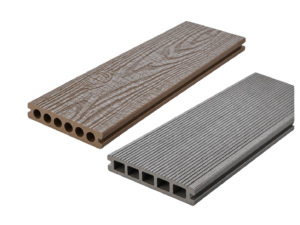
Round and square chamber hollow WPC decking cut-end samples at comparable scale
Round Hole vs Square Hole Hollow Decking

Compare the Complete Profile, Not Only the Hole Shape

Round/circular and square/rectangular chambers are two ways to distribute material inside a hollow board. Neither shape is automatically the better option. Compare the actual models against the intended market, installation and project requirement.

Board dimensions, wall and rib design, material formulation, joist spacing, fastening and installation all contribute to the finished result.

Buying considerationRound / circular chamberSquare / rectangular chamber
Chamber geometryCircular openings within the internal rib layoutSquare or rectangular openings within the internal rib layout
Wall and rib layoutCompare diameter, chamber count, wall dimensions and rib positionsCompare chamber size, chamber count, wall dimensions and rib positions
Board weightConfirm the value for the exact modelConfirm the value for the exact model
Support and fasteningFollow model-specific joist and fixing guidanceFollow model-specific joist and fixing guidance
Evidence to requestCross-section, specification, installation guidance and applicable test dataCross-section, specification, installation guidance and applicable test data
Hollow composite decking used for patio garden and landscape projects
Choose for Your Market or Project

Start with the Buying Requirement

Importers and distributors

Match the model, surface, color and packing to the target price point and local market.

Residential and landscape projects

Review expected traffic, substructure and site conditions together.

Poolside or frequently wet areas

Prioritize texture, drainage, expansion gaps and suitable accessories. Confirm any required slip test.

Higher-demand applications

Commercial traffic, elevated decks or specified spans require model-specific review and evidence.
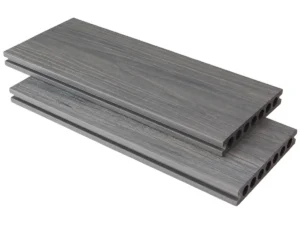
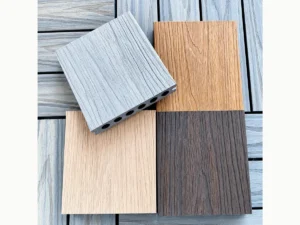
Physical hollow WPC decking color and surface samples
Colors, Surfaces and Capped Options

Build a Hollow Decking Range for Different Price Levels

Current collections may include teak, oak, walnut, brown, charcoal and grey, with grooved, sanded, brushed or embossed surfaces.

Reversible profiles can offer two face directions. Approve the final color and surface against a physical sample before production.

Traditional hollow decking

Broad color and surface choices for residential and general landscape ranges.

Capped hollow decking

A protective polymer surface for improved resistance to staining, moisture exposure and color change.
Important: “Hollow” describes the core; “traditional” and “capped” describe the surface system. Correct drainage, gaps and installation are still required.
Hollow composite decking installed with joists hidden clips and supported board ends
Hollow Decking Installation Essentials

Protect the Profile with the Right Support and Fastening

Joist spacing

Follow the guidance for the selected model and installation conditions.

Board ends and joints

Support all ends and joints; do not leave connection points unsupported.

Hidden clips and screws

Match fasteners to the board groove and joist. Confirm special screw positions when required.

Expansion, drainage and exposed ends

Maintain the required gaps and drainage; finish ends without restricting board movement.

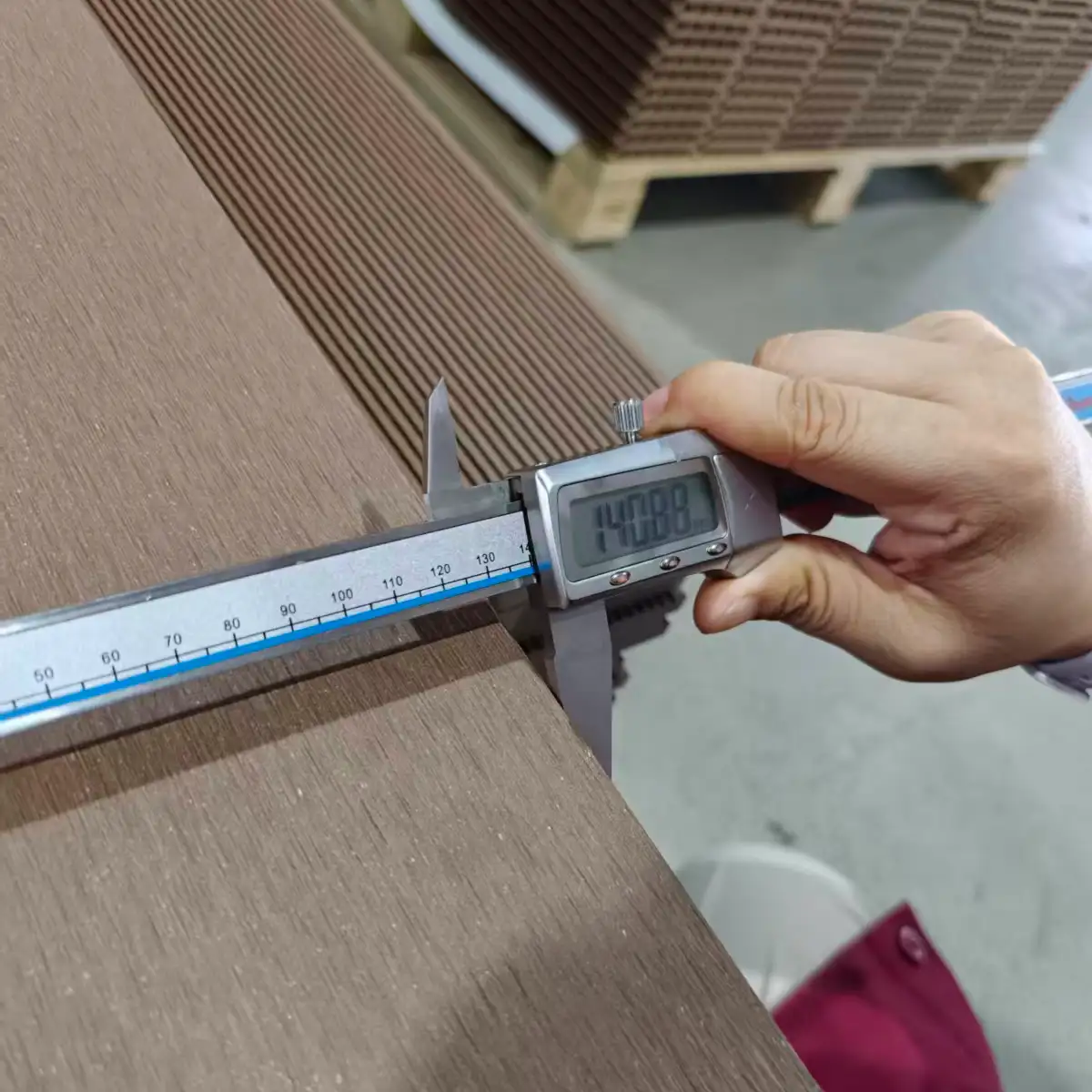
Hollow WPC decking extrusion production and profile inspection
Manufacturer and Wholesale Support

Work with a Hollow Composite Decking Manufacturer in China

Green Covering supports importers, building-material distributors and project buyers with hollow profile comparison, samples, production and export packing.

  • 17+ years of company manufacturing experience
  • Products exported to 45+ countries
  • 20+ extrusion lines for WPC profile production
  • OEM colors, surfaces and private-label packing for qualified orders
  • Matched joists, clips, screws and finishing parts

MOQ, lead time and loading quantity depend on the profile, length, color, packing and order plan.

17+ Years
45+ Countries
20+ Extrusion Lines

What to Send for a Faster Quote

Product direction

Preferred model, size or reference cross-section; round or square chamber preference if any.

Surface and finish

Traditional or capped surface, color, texture and any physical reference sample.

Commercial details

Application, estimated quantity, destination port, test standard, packing and private-label needs.
Partial information is welcome. We can help identify the remaining product decisions before sampling.
Hollow composite decking model dimensions weight surface and sample confirmation
Quality Confirmation

Approve the Hollow Board Before Mass Production

The product reference used for quotation, sampling and production should remain consistent. Before ordering, review the model code, cross-section, dimensions, board weight, surface, color, length, fastening system and packing details.

During production, profile dimensions, weight and visible surface condition are checked against the approved reference. Available test reports and certificates depend on the selected product and the scope and validity of each document.

For a tender or regulated project, send the required standard before product selection so the available evidence can be reviewed against the exact hollow decking model.

Hollow Composite Decking FAQ

Common Questions Before Selecting a Hollow Board

Use these answers as a starting point, then confirm the exact model and installation conditions for your market or project.

Hollow composite decking can be suitable for many residential and landscape applications when the profile and support system are properly selected. Performance depends on dimensions, chamber and rib design, joist spacing, fastening and installation—not simply on whether the board is hollow.
Not in every comparison. Chamber shape changes the profile design, but wall thickness, internal ribs, overall dimensions, material formulation and support spacing also matter. Compare the proposed models and applicable test data.
Joist spacing must follow the selected model and expected use. Request the current installation guidance for the board you plan to order rather than applying one universal value.
Hidden clips are commonly fitted into the side grooves. Face fixing or special details require confirmation of the screw position and pre-drilling guidance. Exposed ends may use matching end caps, fascia boards or trim details without blocking required drainage or movement.
Yes. Hollow refers to the internal structure, while capped refers to the protective outer surface. Capped hollow profiles are available within selected collections.
No. Fire-performance claims must be linked to a specific product and applicable test report. Tell us the required standard so we can check the available product and documentation.
Yes. Green Covering supplies hollow composite decking for wholesale, distribution and project orders. Send the profile or application, quantity, destination and packing requirement for a factory quotation.
Continue Comparing the WPC Decking Range

Related Composite Decking Pages

Hollow Decking for Your Market or Project

Compare Profiles, Samples and Factory Pricing

Tell us what you already know—from a preferred color to a complete project specification. We will help compare hollow WPC decking profiles, chamber designs, surfaces, accessories and commercial terms.