

Composite Deck BoardsWPC Sizes, Profiles & Options
Traditional & Capped WPC
Multiple Sizes & Surfaces
Reversible Board Options
Send a preferred size, structure, surface or project application. Partial specifications are enough to begin comparing suitable boards.
What Is a WPC Deck Board?
WPC deck board is an extruded outdoor profile made from wood-based fiber, thermoplastic material and performance additives. WPC deck boards may be hollow or solid, traditional or capped, and available with smooth, grooved or embossed surfaces. Buyers should compare the exact model, dimensions, chamber design, weight, surface protection, installation requirements and verified test data before selection.
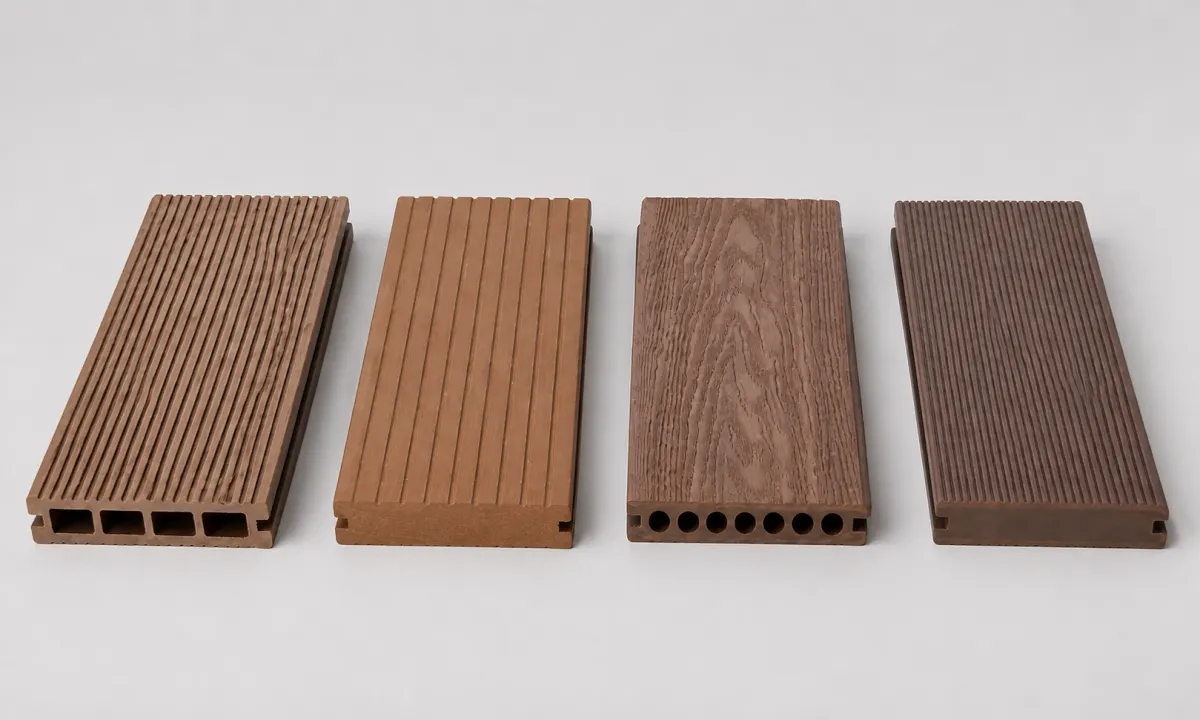
Choose in Four Steps
1. Select traditional or capped surface protection.
2. Compare hollow and solid core structures.
3. Narrow the size and profile according to the application.
4. Confirm the surface, color, installation details and required tests.
WPC Decking Board Sizes & Profiles
The following eight models represent our wider deck board range. They show how dimensions, hollow or solid construction, traditional or capped surfaces and reversible face combinations can vary. Request the complete specification sheet for additional profiles.
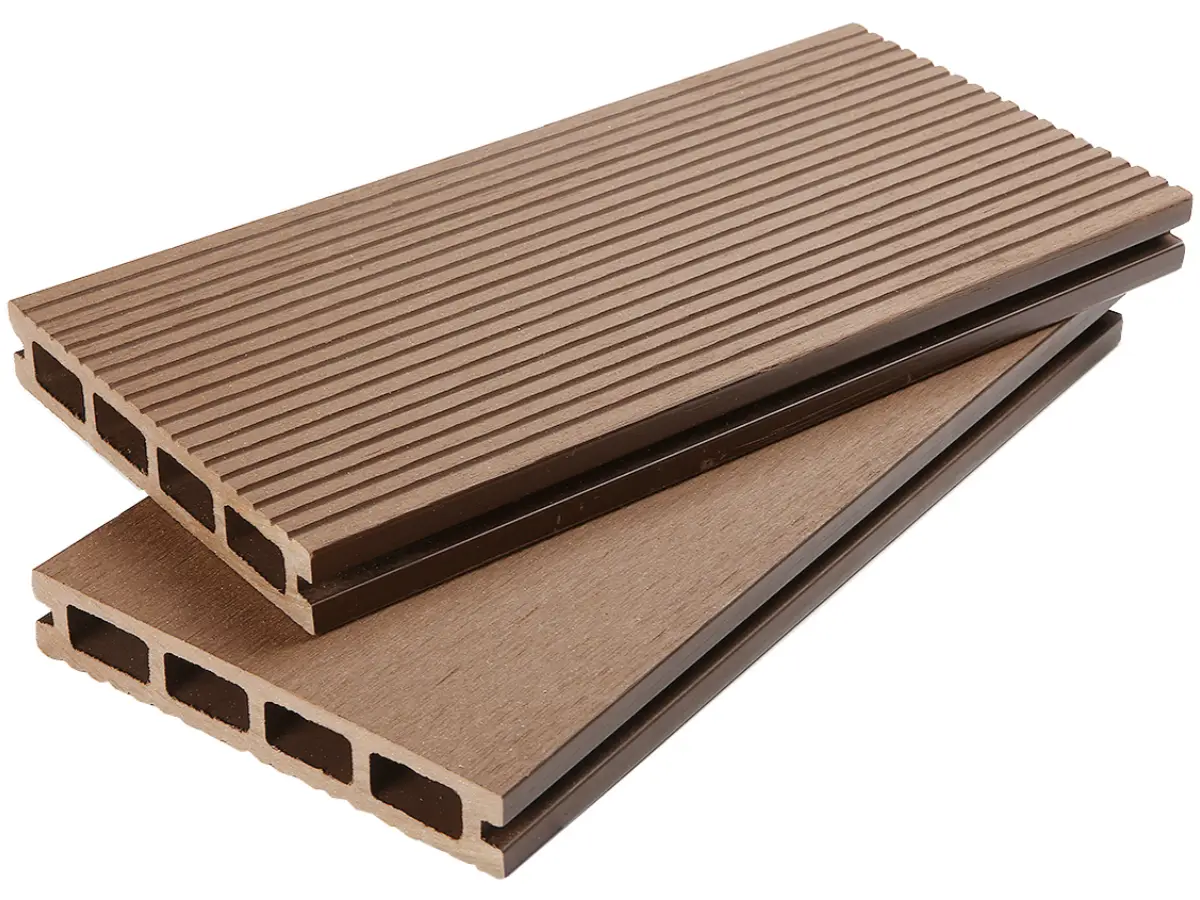
145 × 21 mm WPC Decking Board
A regularly supplied traditional WPC board with a hollow rectangular-chamber structure. One face is smooth and the other is fine-grooved; either face may be installed upward to suit the required appearance.
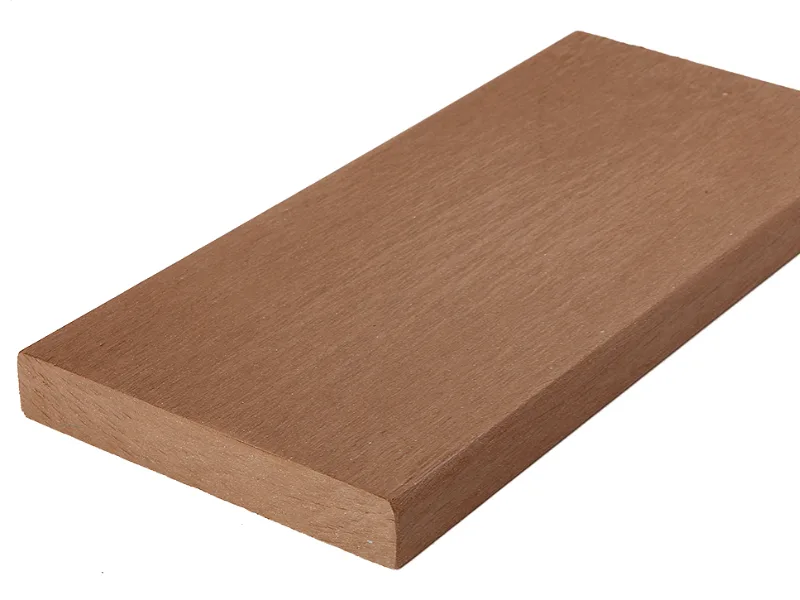
140 × 25 mm
Traditional / Hollow
Reversible wide-grooved and fine-grooved faces for two linear surface directions.
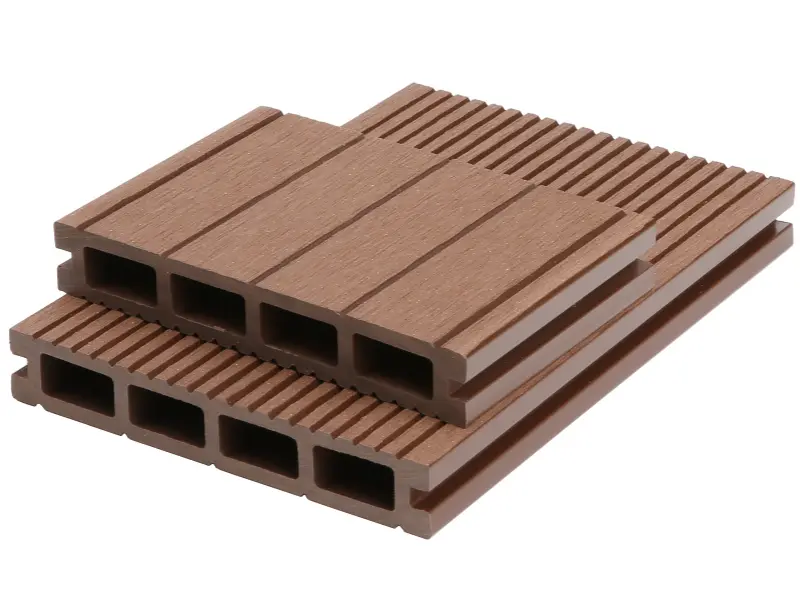
150 × 25 mm
Traditional / Hollow
Fine-grooved and smooth reversible faces in a wider standard-format board.
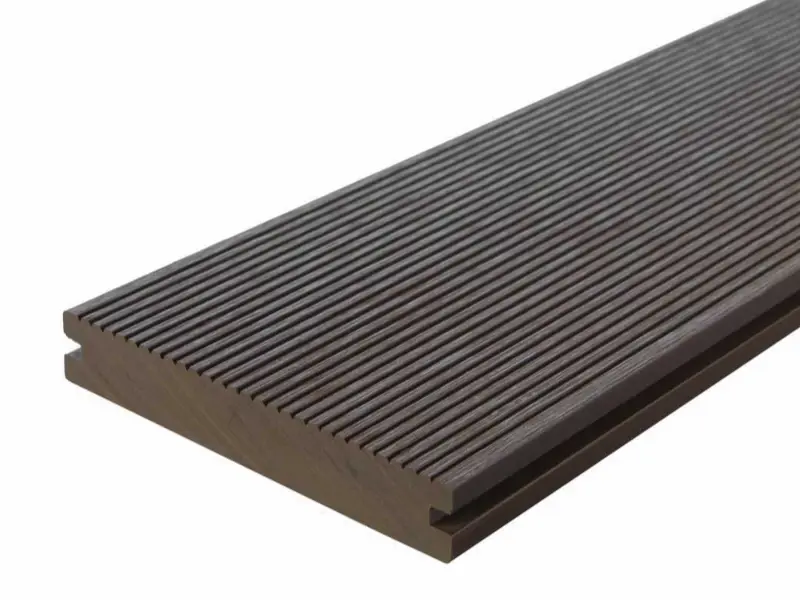
140 × 25 mm
Traditional / Solid
Wide-grooved and smooth faces with a full-section solid construction.
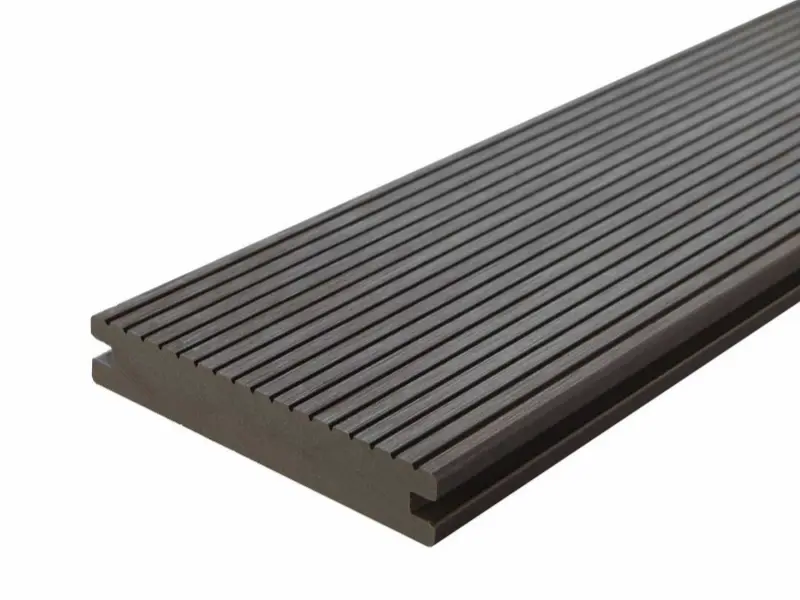
SMX143S25
143 × 25 mm
Traditional / Solid
Fine-grooved and smooth reversible faces for two groove scales.
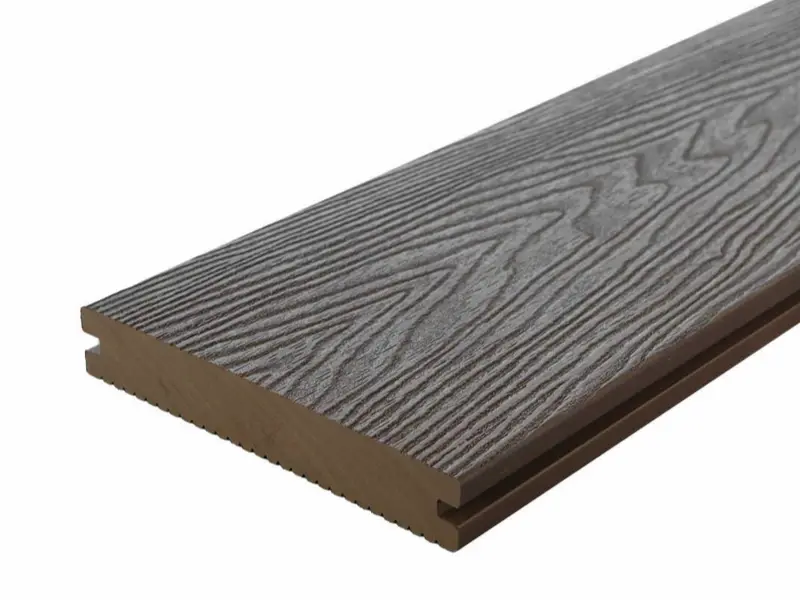
SMX150S25
150 × 25 mm
Traditional / Solid
An embossable solid profile for projects that require a selected surface texture.
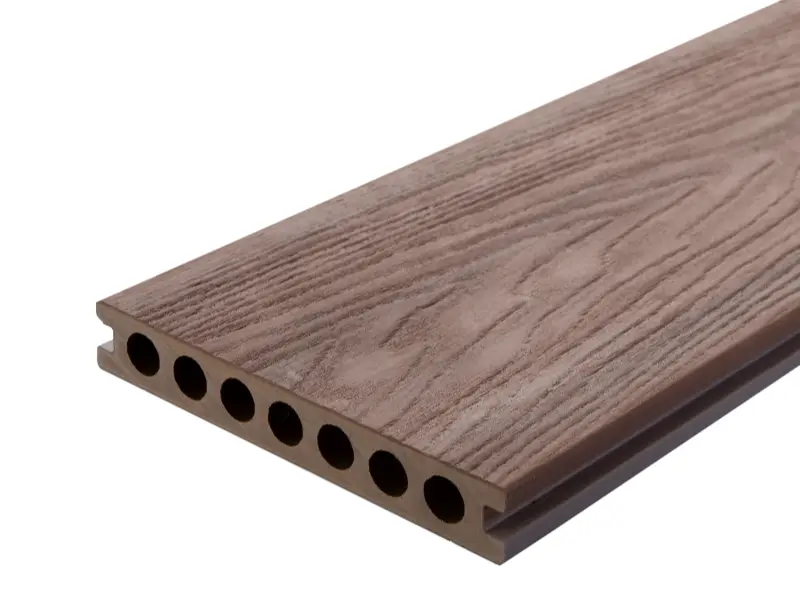
150 × 23 mm
Capped / Hollow
A wider co-extrusion hollow profile; select its color and embossing from the current capped collection.
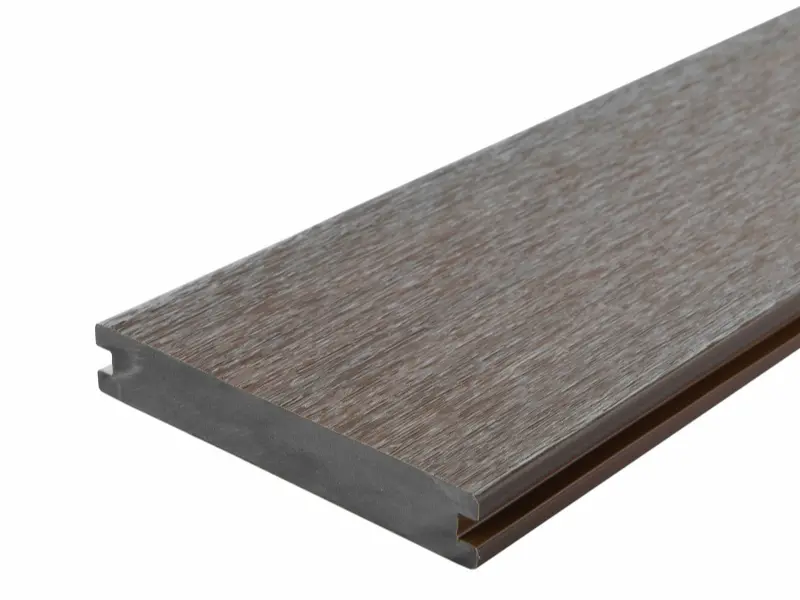
140 × 23 mm
Capped / Solid
A co-extrusion solid board; confirm the current wood-grain, color and cap finish before sampling.
More Profiles Are Available
Our full range contains additional widths, thicknesses, chamber designs and face combinations. Tell us what you already sell or what the project requires.
Model availability, exact cross-section, surface, color and commercial terms should be reconfirmed for the current order.
Hollow vs Solid WPC Deck Boards
Hollow and solid describe the board cross-section, not the complete performance result. The final choice should be made together with profile dimensions, chamber or wall design, joist spacing, installation method and verified test data.
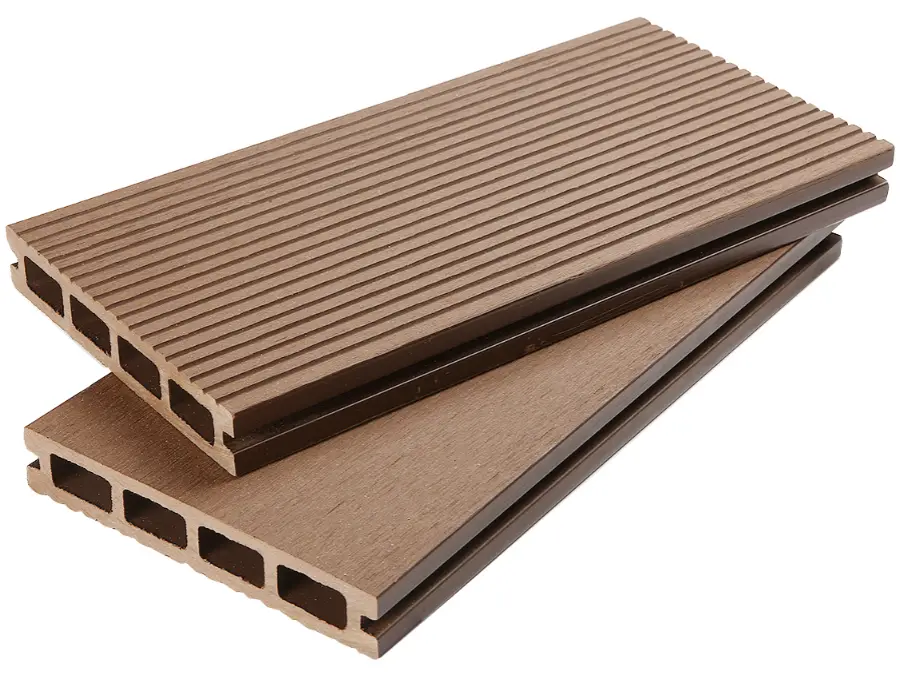
Hollow Deck Boards
Lower material use and easier handling make hollow profiles practical for many patios, gardens and landscape projects. Compare chamber shape, wall thickness and supported span instead of choosing by the word “hollow” alone.
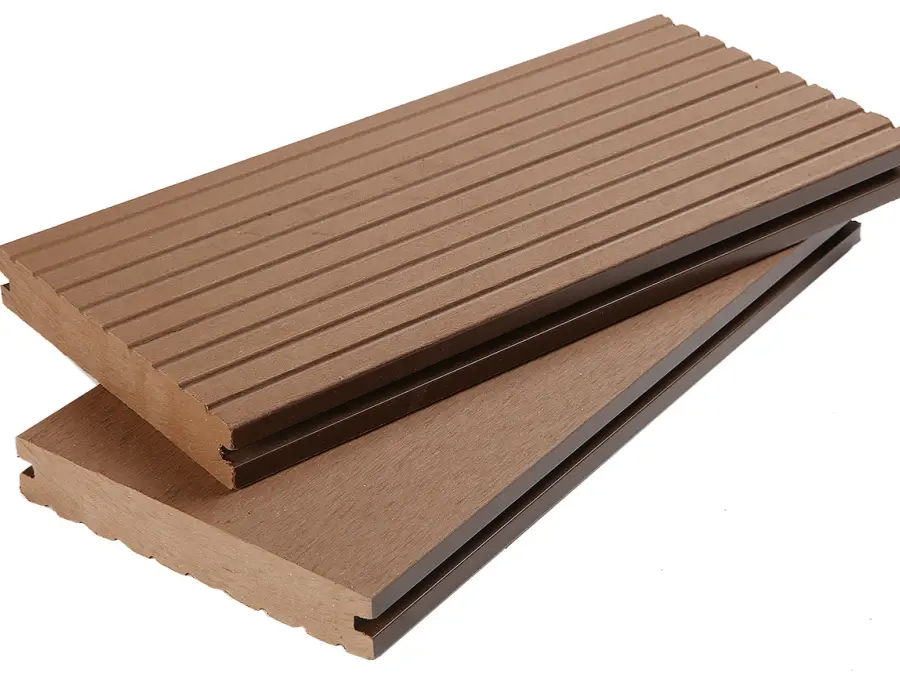
Solid Deck Boards
Solid profiles are heavier and may be preferred where buyers want a full-section board or a different load profile. They are not automatically suitable for every high-traffic project without checking the full system.
| Selection Point | Hollow Board | Solid Board |
|---|---|---|
| Board weight | Normally lighter within a comparable size range | Normally heavier because of the full section |
| Cost tendency | Often more material-efficient | Often higher due to greater material use |
| Handling | Easier to move on many standard projects | Heavier to handle and transport |
| Where to start | Patios, gardens, paths and standard landscape applications | Projects requesting a solid feel or a specifically verified load profile |
| What must be checked | Chambers, wall design, span, fasteners and end treatment | Dimensions, weight, span, support and installation details |
Already focusing on hollow boards? See our detailed hollow composite decking options.
Traditional vs Capped WPC Deck Boards
Traditional and capped boards can both be hollow or solid. This comparison concerns the exposed surface system, so it should be evaluated separately from the core profile.
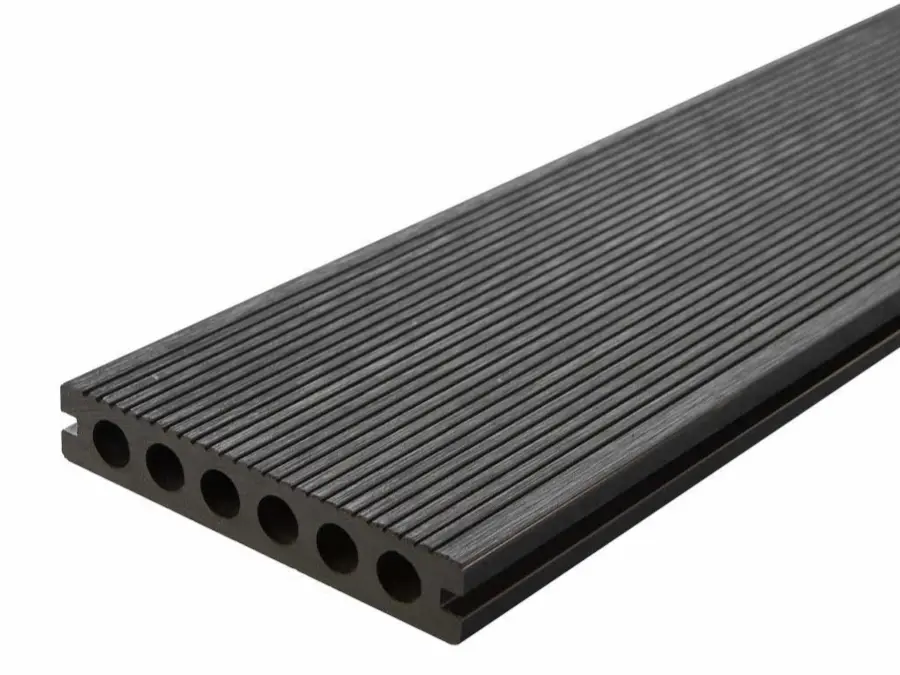
Traditional / Uncapped
The composite body also forms the board surface. It is a practical starting point for standard outdoor programs that prioritize familiar grooved or smooth finishes and competitive pricing.
Confirm: surface treatment, color reference, intended environment and maintenance expectations.
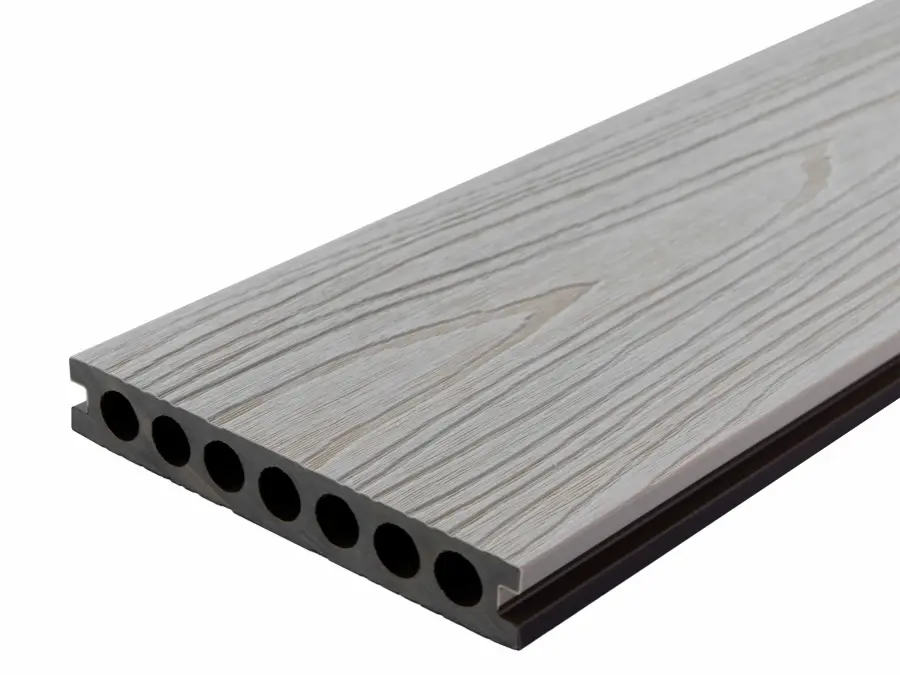
Capped / Protected Surface
A co-extruded layer covers the composite core, supporting stronger surface protection and broader wood-grain or multi-tone appearance options, subject to the selected series.
Confirm: cap coverage, surface embossing, color, cleaning conditions and required test evidence.
Choose the product generation and the profile structure as two separate decisions. A capped hollow board and a traditional solid board solve different price, surface and structural requirements.
Surface & Reversible Board Options
Groove scale, embossing and reversible construction affect the visual rhythm of the finished deck. Always approve the exact surface and color on a physical sample because the same color direction can look different on another profile or texture.
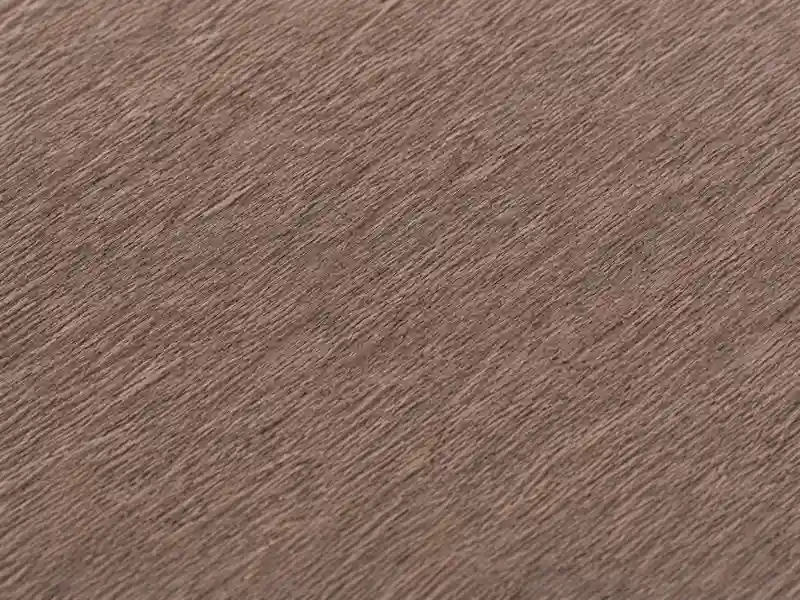
Smooth Face
Creates a quieter visual field and may be used alone or as one face of a reversible profile.
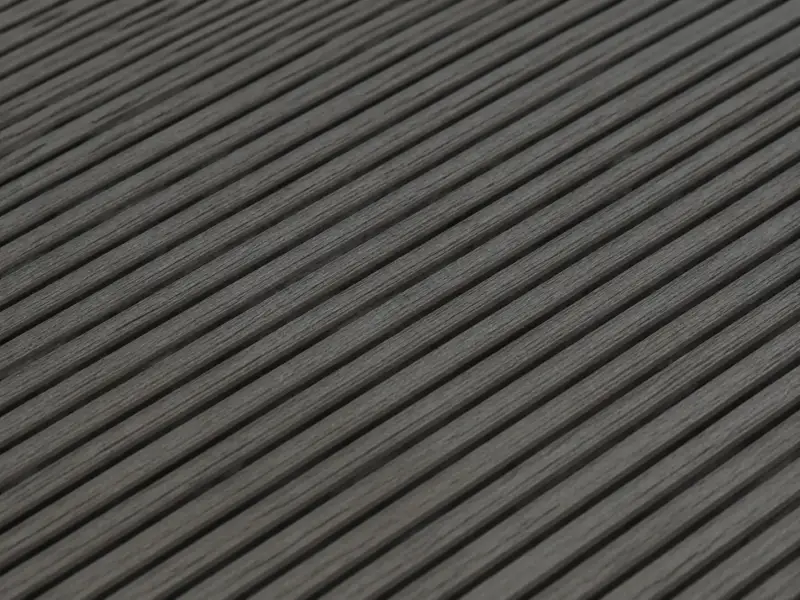
Fine Groove
Narrow repeated lines produce a tighter, more detailed board appearance.
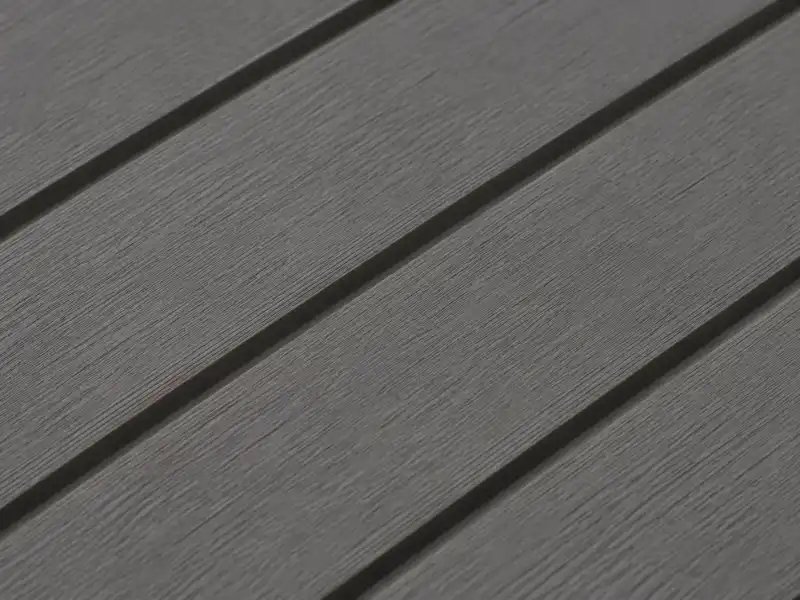
Wide Groove
Broader channels create a stronger linear pattern across larger deck areas.
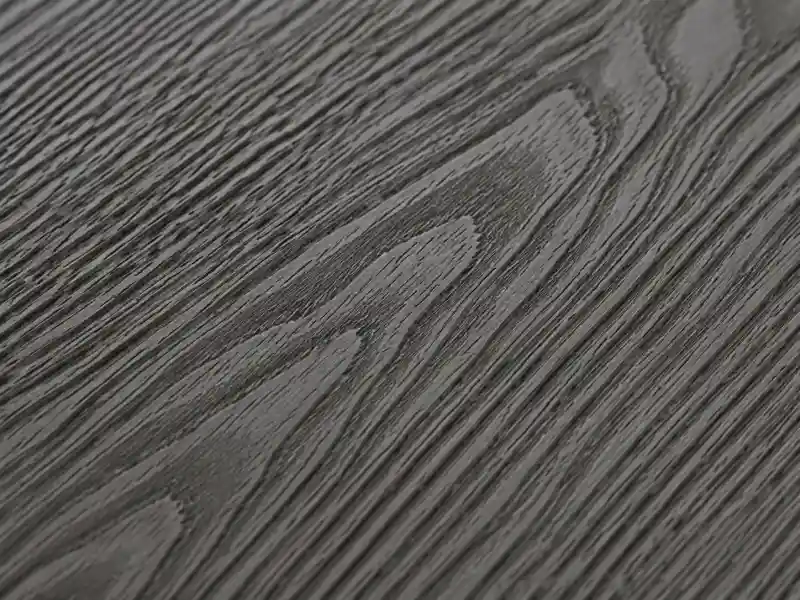
Embossed Wood Grain
Embossed or deeper wood-grain finishes add texture and a more natural visual direction.
Two Faces, One Board Profile
The SMX145H21 profile combines one smooth face with one fine-grooved face, and either side can face upward during installation. Other models combine fine and wide grooves or different face treatments. “Reversible” describes installation choice; it does not mean both faces should be exposed in the finished deck.
Choose the Right Deck Board for Your Project
The project type is a starting point, not a substitute for technical confirmation. Share the site conditions, expected use, support system and required standard so the board profile can be evaluated as part of the complete installation.
Residential Patios & Gardens
Start with the desired price position, appearance and handling. Many hollow traditional profiles are practical candidates.
Prioritize: finish, color, board weight, span and accessory match.
Walkways & Landscape Areas
Review repeated use, route width, substructure and board direction before narrowing the profile.
Prioritize: board dimensions, support spacing, surface, drainage and fastening.
Poolside & Wet Areas
Surface protection, drainage and the required slip test become more important where water is frequent.
Prioritize: capped options, suitable texture, gaps, drainage and test evidence.
Commercial or Higher-Traffic Use
Do not select by “solid” or “capped” alone. Define traffic, loads, span, substructure and formal performance requirements.
Prioritize: verified data, profile design, system engineering and installation control.
Deck Board Performance & Quality Testing
Testing helps compare a selected board against the intended market or project requirement. The method, sample, duration and acceptance criteria must be identified before a result is treated as formal evidence.
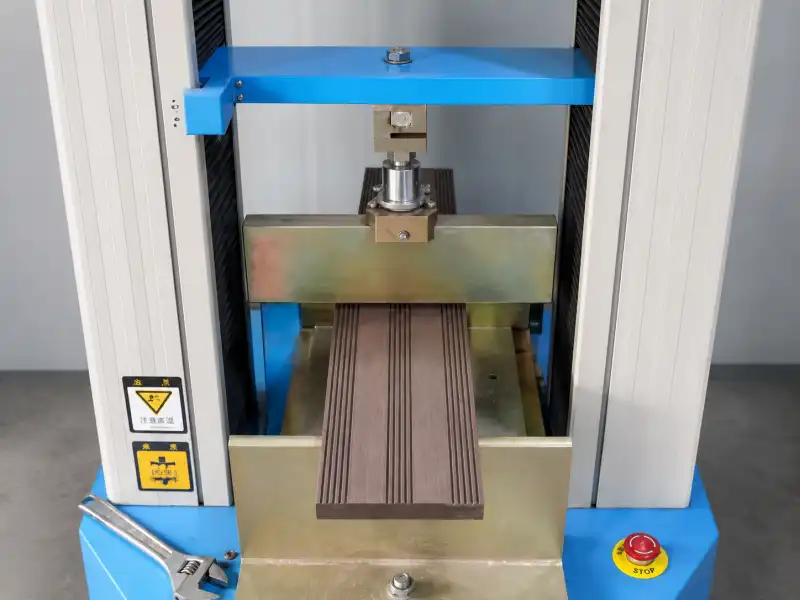
Physical Performance Checks
Depending on the selected board and required method, checks may cover impact strength, bending or failure load, Shore hardness and density. The purpose is to compare the actual profile—not to assign one result to every board in the range.
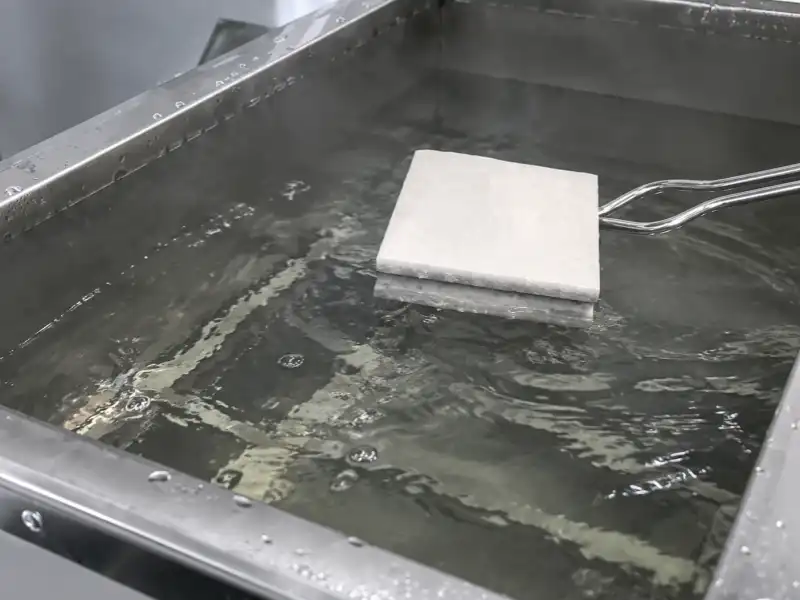
100°C / 48+ Hour Boiling Check
For this comparative check, the board’s initial dimensions and weight are recorded, the sample is exposed to water at 100°C for more than 48 hours, then cooled and checked for surface condition and dimensional or weight change.
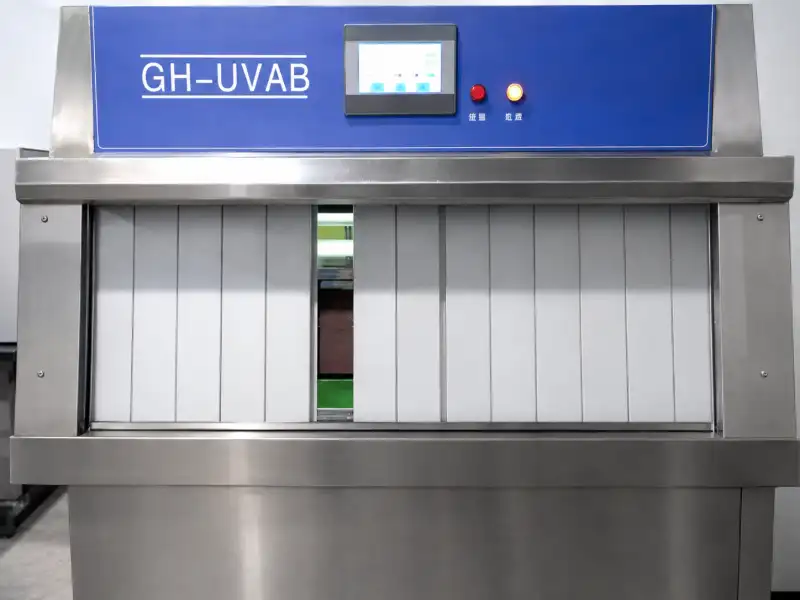
Accelerated UV Aging
A controlled accelerated exposure can be used to compare color and surface condition before and after simulated UV aging. Interpretation depends on the test method, cycle, exposure time and selected product.
Ask for Evidence That Matches the Exact Board
Internal comparative checks support production review, while third-party reports are used where a buyer or project requires a stated standard. Request the available report, product reference and test method before relying on a result for tender, compliance or marketing use.
What to Include When Ordering Deck Boards
You do not need a finished specification before contacting us. Share what is already known, and we can identify the missing decisions before preparing samples or a quotation.
Board Information
Application and target market
Preferred model or dimensions
Core and surface system
Face and color direction
Order Information
Estimated quantity
Destination and packing
Required standard or report
Accessories or system details
MOQ, lead time, packing and current availability depend on the selected profile, color and order plan and will be confirmed in the quotation.
Composite Deck Board FAQ
Looking for the Complete WPC Decking Supply Solution?
Review our decking collections, customization options, accessories, quality control and complete B2B sourcing process.
Request Profiles, Samples or a Quotation
Send the profile or size you are considering—or simply describe the project. We will help compare board structures, surfaces, colors, accessories and the information needed for an accurate quotation.
Useful starting details: market, application, board size, hollow or solid, traditional or capped, quantity and destination.
Include as much information as you have. Partial requirements are welcome.