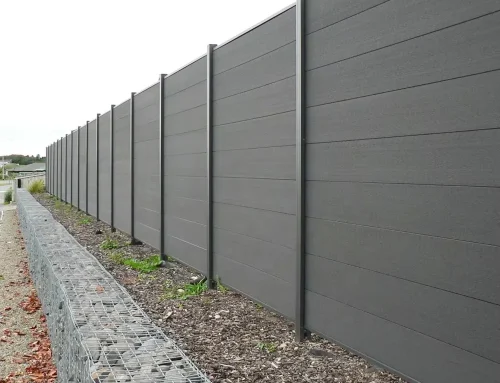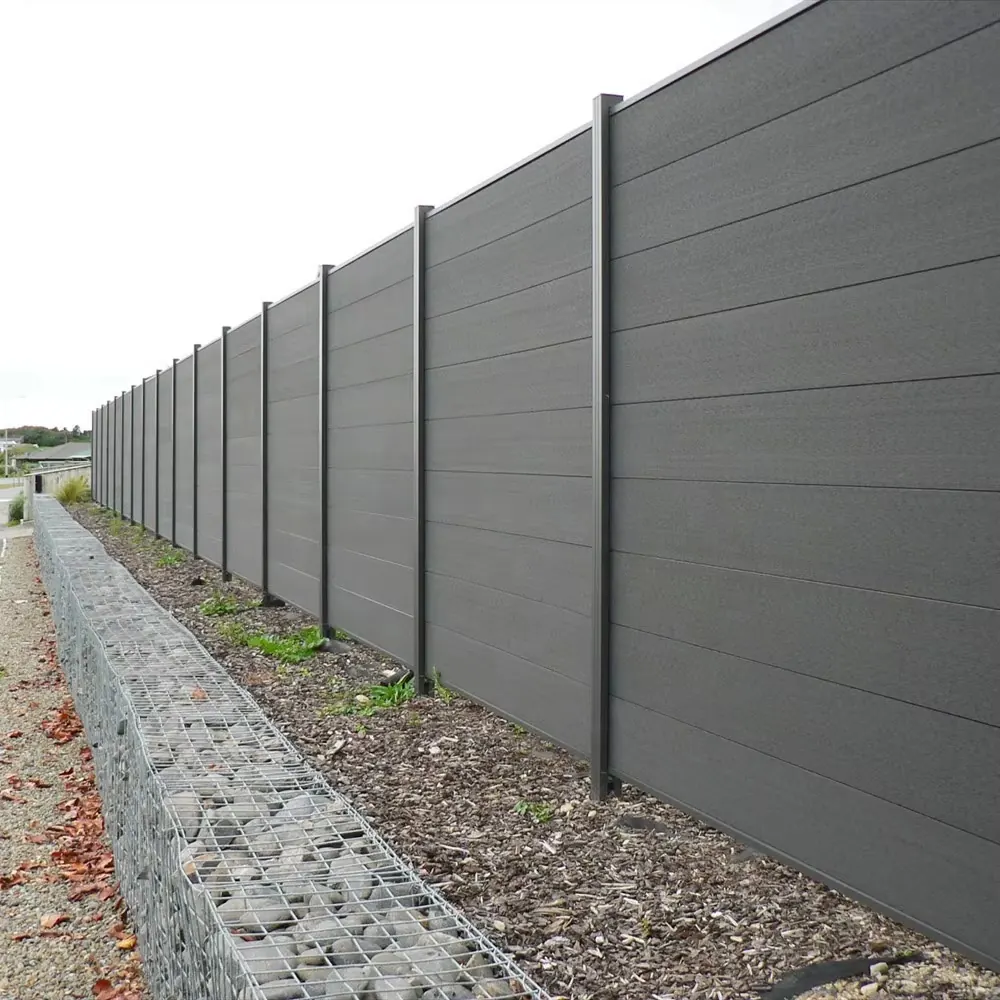

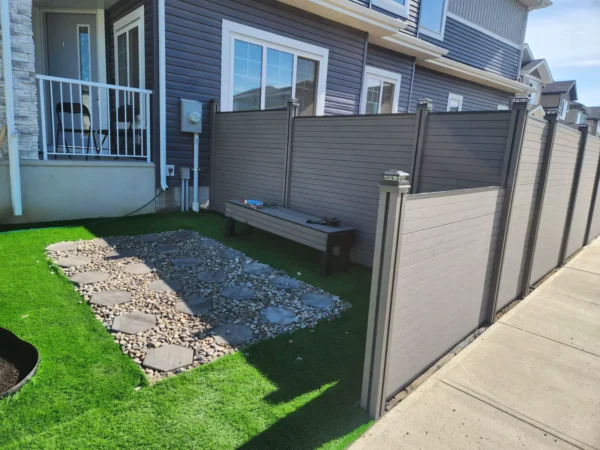
Most WPC fence enquiries we receive start with three details: total length, finished height and a preferred colour. The next question is usually the price of the fence panels. That is enough for an initial discussion, but not enough for us to prepare a reliable project quotation.
A fence is a complete assembly, not just a board. The posts, rails, trims and connectors all depend on the layout, site conditions and fixing method. When these details are clear from the beginning, we can prepare a more accurate component list and the buyer can compare quotations on the same basis.
This WPC fence buying guide focuses on the purchasing side of a project: what needs to be confirmed before quotation, what belongs in a complete system and which details help avoid missing parts or repeated revisions. It is written mainly for project buyers, distributors and importers preparing an RFQ.
If you already have the fencing system and are looking for fixing and assembly instructions, see our composite fencing installation guide.
A fence board is not a complete fence system
A WPC fence board forms the visible surface. A complete system may also include compatible posts, top and bottom rails, post caps, trims, brackets or connectors, and reinforcement where the selected system requires it. If the project includes a gate, the gate frame and hardware must also be defined, whether supplied with the fence or sourced separately.
This distinction matters when comparing quotations. A lower price may simply reflect a different scope, with posts, brackets, trims or other accessories quoted separately. Instead of comparing only a price per metre, compare the complete bill of materials for the same finished layout.
At GreenCovering, many enquiries initially include only the total length and height. Before preparing the component list, we still need to confirm the number of runs, corners, end points, gates and changes in ground level. These details directly affect the number of posts and accessories.
Start with the application and site conditions
Before preparing a final quotation, we first ask where the fence will be used and how the posts are expected to be fixed.
A residential garden, a commercial project, a long open boundary and a distributor stock programme do not always need the same configuration. We also pay attention to site exposure. Coastal, elevated or exposed locations may need a different assessment from a sheltered garden.
A project installed on existing concrete may require a different post and base arrangement from a fence installed on natural ground. Mixed ground conditions, corners, slopes and gate openings can also change the component list.
At quotation stage, we first need to understand these conditions. The detailed fixing method should then follow the selected fence system, the actual site and any local project requirements rather than a generic installation guide.
For the assembly sequence and the differences between concrete and natural-ground fixing, see our How to Install Composite Fencing guide.
WPC fencing is generally used as boundary and privacy screening. If the installation must perform as a structural guard, safety barrier or regulated pool enclosure, the project requirements should be checked against local regulations and reviewed by the responsible local professional before ordering.
Select the board, finish and system series
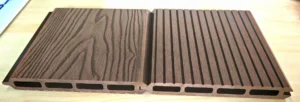
The starting point is the board profile, orientation, supplied length, surface finish and colour. Once these are clear, we can build the rest of the system around the selected series. Some ranges allow horizontal or vertical installation, but the frame and fixing details are not necessarily the same.
Our WPC fence ranges include different constructions, such as traditional uncapped and co-extruded capped boards. Profiles, surfaces and colours vary between series, so the performance information and accessories must match the exact product being quoted.
Mixing posts, rails or trims from different series is not something we recommend unless compatibility has been checked. Groove dimensions, bracket patterns and profile sizes can look similar in photos but still differ in practice. If a project needs mixed components, we check the dimensions first and use physical samples to review the colour match where necessary.
GreenCovering factory its available WPC fence systems by product series. In practice, we confirm the series first and then match the posts, rails, trims and other accessories around that system.
Check What Is Included in the Quotation
Our quotations are structured to show which components are included, which are optional and which would need to be sourced separately. This makes it easier to compare the real scope of two quotations instead of looking only at the board price.
Component | Function | What to confirm |
Fence board or panel | Forms the privacy surface | Profile, orientation, colour and supplied length |
Post | Supports each fence section | Size, type, spacing and fixing method |
Top and bottom rail | Holds or closes the panel | Compatibility with the chosen board |
Cap and trim | Finishes post tops and exposed edges | Series, colour and quantity |
Bracket or connector | Joins the system components | Material, fixing method and quantity |
Reinforcement, if applicable | Adds support to the specified system | Whether it is required for the project |
| Gate components, if applicable | Creates the access opening | Clear width and supply scope |
Provide a layout for accurate quantity planning
A simple dimensioned sketch is often more useful than only telling us the total fence length. It does not need to be a formal drawing. A hand-drawn plan is usually enough if it shows:
- Total length and the length of each separate run
- Required finished height from finished ground level
- All corners, end points and changes in direction
- Gate positions and clear opening widths, if any
- Changes in ground level
- Ground or base conditions and the proposed fixing method
- Colour, finish and chosen product series
- Destination country and port
We often receive enquiries described only as “100 metres of fence.” That could mean one straight boundary or several garden sections with corners and gates. The board area may be similar, but the post and accessory quantities can be very different. This is why we normally ask for the layout before confirming the component count.
For the same reason, we do not use a generic posts-per-metre formula from another catalogue. Panel width and designed post spacing vary between systems, so quantities must be calculated from the actual series and layout being ordered.
Have a layout ready? Send us the total length, finished height, corner and gate positions—even a hand-drawn sketch is enough for an initial review. We can then prepare a system-based component list for quotation.
Approve physical samples before production
Screen images and printed colour cards help with the first selection, but they are not a reliable final approval standard. Surface texture, gloss and colour can look different under indoor lighting, daylight and outdoor conditions.
Before production, we ask buyers to approve a physical sample of the actual profile, colour and construction and keep it as the reference. If fencing is being combined with decking or cladding, it is better to view the samples together because the same colour name can look different across profiles and surfaces.
For orders shipped in more than one batch, batch consistency and spare components should be discussed before production. A few extra caps, trims, brackets or other system-specific parts cost little compared with arranging an urgent international replacement shipment later.
Include packing, branding and export requirements
For project, distributor and private-label orders, it helps to include the commercial requirements in the first RFQ rather than adding them after production planning has started:
- Order quantity
- Logo, labels, carton marks, barcodes and packaging artwork
- Whether boards and accessories should be packed together or as separate SKUs
- Pallet and container-loading requirements
- Destination country and port
- Required shipping documents and product documentation
- Spare components needed for after-sales service
Available reports and declarations depend on the exact product series and destination market. Before they are used for a project, we confirm that the documents are current and that their scope covers the product being quoted. A report for another WPC product should not automatically be treated as evidence for the fence system.
WPC fence RFQ checklist
To prepare a workable quotation, we usually start with the following information:
- Application and installation environment
- Dimensioned layout with runs, corners, ends and gates
- Finished height and preferred board orientation
- Selected profile, construction, colour and surface
- Required posts, rails, caps, trims and connectors
- Ground conditions, fixing method and site exposure
- Total order quantity plus spare-parts requirement
- OEM packing, labelling and pallet requirements
- Destination port and required documentation
Once we have these details, we can calculate the quantities more accurately and pack each product separately. If your project includes several WPC outdoor products, such as fencing and decking, we recommend checking the colours and finishes with physical samples before production.
FAQ
Can I order WPC fence boards without posts and rails?
Yes, if you already have a compatible supporting system. We would first confirm the board dimensions and fixing method. For a new fence project, ordering the matched system normally reduces the risk of missing or incompatible components.
What information is needed to calculate a WPC fence order?
We normally ask for the length of each run, finished height, corners, end points, gates, ground-level changes, fixing conditions and the selected product series. A simple dimensioned sketch lets us calculate posts and accessories much more reliably than total length alone.
Does every WPC fence require metal reinforcement?
Not always. Whether reinforcement is needed depends on the system design, fence height, post spacing, fixing method and site exposure. We confirm this against the exact configuration being quoted, while local structural requirements should still be reviewed for the actual project.
Can WPC fence colours and packaging be customised?
Yes, we can do OEM for your order.
Prepare the fence as a system, not a board order
A workable WPC fence quotation starts with the finished layout. Once the application, dimensions, corners, gates, product series, fixing conditions and packing requirements are clear, we can prepare the boards, posts and accessories as one coordinated component list instead of treating the fence as a board-only order.
Planning a WPC fence project or distributor order? Send us your layout, required height, preferred colour, fixing conditions and destination port. Our team can help match the boards, posts and accessories and prepare a project-based quotation.