
Introduction: Many buyers unsure if their project need underlay or not, and they try to know more about the underlay information.SPC flooring underlay can improve walking comfort on SPC flooring, and different materials can provide different effects, such as sound reduction and moisture protection. However, choosing the right underlay for different projects is not so simple. Below, we will compare different materials, thicknesses, functions, and the two most popular underlay materials to help buyers easily understand the function of underlay and whether their projects require it.
What Is SPC Flooring Underlay?
SPC flooring underlay is a layer of material installed under SPC flooring or pre-adhered to the back of the SPC flooring. Its main functions are to improve sound insulation, provide moisture protection, enhance walking comfort, and also contribute to the flooring’s locking system and stability. In most modern SPC flooring systems, an underlay is pre-adhered; however, depending on the project and performance expectations, a separate underlay may be laid before installing the SPC flooring.
There are different materials available for SPC flooring underlay; we will primarily discuss the underlay pre-adheded to the back of the SPC flooring.
Types of SPC Flooring Underlay
1.IXPE Underlay
IXPE (Irradiated Cross-Linked Polyethylene) is a closed-cell foam underlayment and the most popular choice among SPC flooring underlays. It boasts excellent moisture resistance, superior sound insulation, and high elasticity, significantly improving walking comfort for rigid-core SPC flooring. It is a preferred choice for many high-end residential and commercial projects.
2.EVA Underlay
EVA (Ethylene Vinyl Acetate) is a cost-effective foam underlayment that provides some cushioning and shock absorption. However, compared to IXPE, its sound insulation performance is lower, and its resilience is weaker over long-term use. It is a good choice for projects with limited budgets.
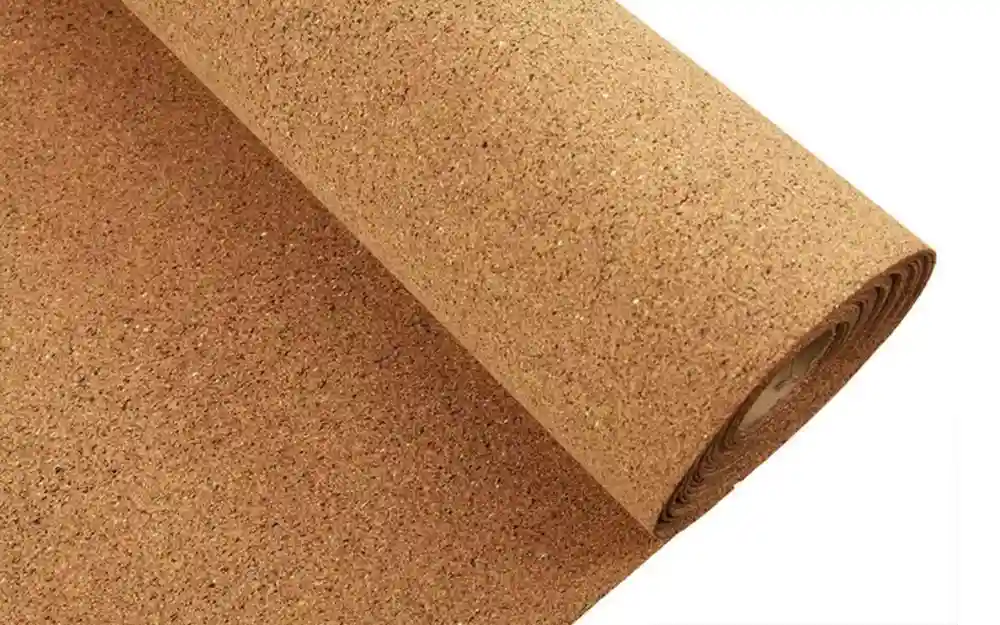
3.CORK Underlay
Cork underlay is a natural material made from compressed cork granules. It has good sound absorption and heat insulation functions, but because of its material, it is sensitive to humidity and is relatively expensive. Suitable for high-end projects with high requirements on environmental protection and dryness.
4.PE Foam Underlay
PE foam underlay is an entry-level cushioning material with relatively poor durability and sound insulation, and is generally not suitable for high-performance SPC flooring.
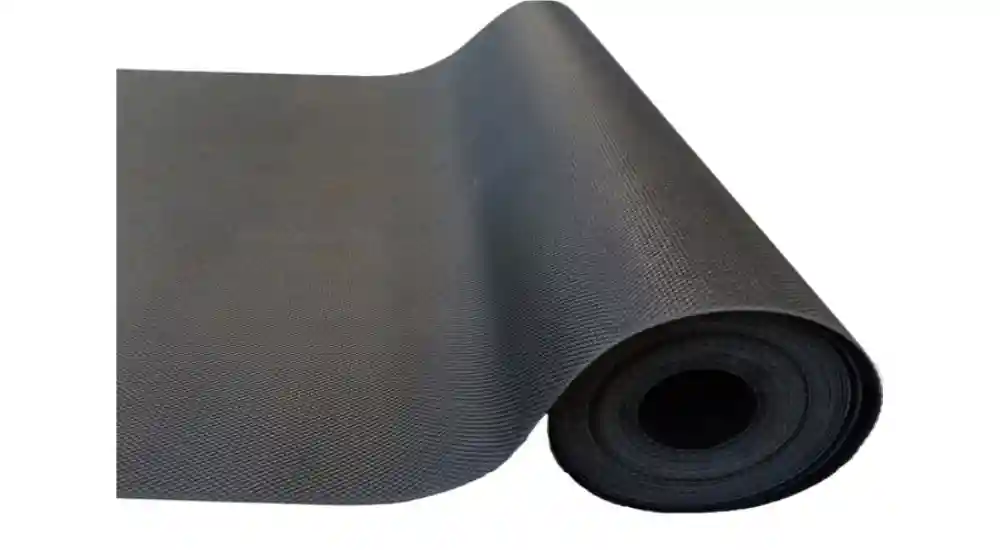
5.Rubber Underlay
Rubber underlay is a high-density material with excellent sound insulation and durability and is often used in high-end residences and projects. However, due to its weight and price, installation is more complicated, and it is not common among pre-applied SPC flooring underlay materials.
What Are the Benefits of Different SPC Flooring Underlay?
SPC flooring underlay has many advantages, and different materials exhibit different performance characteristics.
| Function | IXPE | EVA | PE Foam | Cork |
|---|---|---|---|---|
Sound Reduction | High | Medium | Low | High |
Moisture Resistance | High | Medium | Medium | Medium |
Comfort | High | Medium | Low | High |
Stability | High | Medium | Low | High |
Attached Pad vs Separate Underlay
SPC flooring underlay is divided into attached pad. spc flooring attached pad is pre-pasted on the back of spc flooring. Separate underlay is an additional layer installed between the subfloor and SPC flooring during installation.
Feaure | Attached Pad SPC | Separate Underlay |
|---|---|---|
Installation | Factory pre-installed | Installed on-site |
Speed | Faster | Slower |
Cost | Lower labor cost | Higher labor cost |
Consistency | High | Depends on installer |
Acoustic Performance | Standard to high (IXPE) | Flexible (can upgrade) |
Risk of error | Low | Higher |
Application | Most residential & commercial | Special acoustic projects |
Important Note:
If SPC flooring already comes with an attached IXPE or EVA pad, installing an additional underlay is usually not recommended. Double layering may affect locking system stability and can lead to performance issues over time.
What thickness of Underlay Is Best for SPC Flooring?
Generally, we have IXPE and EVA in thicknesses of 1mm, 1.5mm, and 2mm. We don’t recommend anything thicker than that. Thicker isn’t necessarily better; thicker materials are more expensive, but if it exceeds 2mm, the cushioning and elasticity provided by the underlay can actually negatively impact the stability of the click system.
How to Choose the Right SPC Flooring Underlay
Different projects and usage scenarios require different choices and requirements for floor underlay. We will recommend the most suitable attached underlay based on some of the most common usage scenarios.
1. Residential Projects
For residential homes, the general requirements are comfort underfoot, a reasonable budget, and basic sound insulation. Therefore, IXPE and EVA underlays are recommended.
2. Apartments
Apartments have strong impact sound insulation (IIC requirements) because of their high occupancy density. It’s crucial to ensure that noise levels between adjacent rooms don’t negatively impact comfort and that the insulation is designed for long-term use and maintenance. Therefore, we recommend using high-density IXPE underlay.
3.Offices
Offices typically have chairs with casters, and it’s important to keep noise levels moderate, so IXPE and rubber underlay are recommended.
4.Hotels
Hotels place the highest importance on noise control and guest comfort when walking on the ground. Overall, for luxury hotels, Projects with strict IIC requirements often prefer IXPE underlay, with a thickness of 1.5mm or 2mm, as this provides excellent walking comfort and noise control.
Common Mistakes to Avoid
1.Using Double Underlay
We do not recommend our customers to install double-layer underlay, which means laying SPC attached underlay on a floor that already has one layer of underlay, unless it is a functional moisture barrier. Otherwise, the rebound space of double-layer underlay is too large, which is not good for the floor’s locking system and can easily lead to uneven stress on the locking system, breakage, etc.
2.Choosing Excessive Thickness
Thicker IXPE is not necessarily better. While thicker IXPE has higher resilience and stronger cushioning performance, SPC flooring is a rigid floor that is highly dependent on the stability of the ground. Excessively thick underlay can cause the SPC flooring’s locking mechanism to move excessively during use, leading to edge warping or locking mechanism breakage.
3.Ignoring Moisture Conditions
Although SPC flooring is waterproof, if the installation environment is too humid or damp, it will not only develop an odor over time, but also mold will grow underneath. Therefore, if it is installed in a humid environment or a place where the ground is damp, we recommend that customers do moisture-proofing treatment first.
Why We Recommend IXPE for Most SPC Projects
At Green Covering Factory, we have produced SPC flooring with attached IXPE and EVA underlay for customers in more than 40 countries.
Based on feedback from apartment, hotel and residential projects, IXPE remains the most popular choice because of its balance between comfort, sound reduction and cost.
FAQ:
1.Does SPC flooring need underlay?
Yes, but it depends on whether the flooring already includes an attached pad.If SPC flooring comes with a pre-attached IXPE underlay, an additional underlay is usually unnecessary.For acoustic apartment projects, a separate acoustic underlay may still be required.
2.What is the best underlay for apartments?
For apartments, we will suggest use IXPE, as the sound absorption effect is better.
3.Can I install SPC flooring over existing underlay?
If the SPC flooring does not have an attached pad, it can be installed over existing underlayment. If the SPC flooring comes with an integrated underlayment, you need to consider the material: if it is a moisture barrier, installation can proceed as usual; however, if it is a thicker underlayment designed for cushioning, direct installation is not recommended.
At Green Covering Factory, you can always get from 1mm-2mm IXPE pad for the SPC flooring, we have professional sales can help you choose the best underlay for your projects.