

SPC Flooring Advantages: A Practical Guide for Importers and Project Buyers
The most common question we hear from importers and project buyers is not “what are the advantages of SPC flooring?” They have already read the list. What they actually want to know is whether those advantages will hold up in their specific market, on their specific project, and across the scale of orders they are planning to place.
After supplying SPC and LVT flooring to buyers across 45+ countries for over 17 years, we have a clear sense of which advantages are real and reliable, which ones depend on specification decisions that are easy to get wrong, and what buyers should confirm before committing. That is what this guide covers.
The short version: SPC flooring has genuine advantages as a rigid core vinyl product. Most of them depend on how the product is specified and installed. All of them depend on whether the supplier delivers consistently.
What Makes SPC Flooring Different From Other Vinyl Options
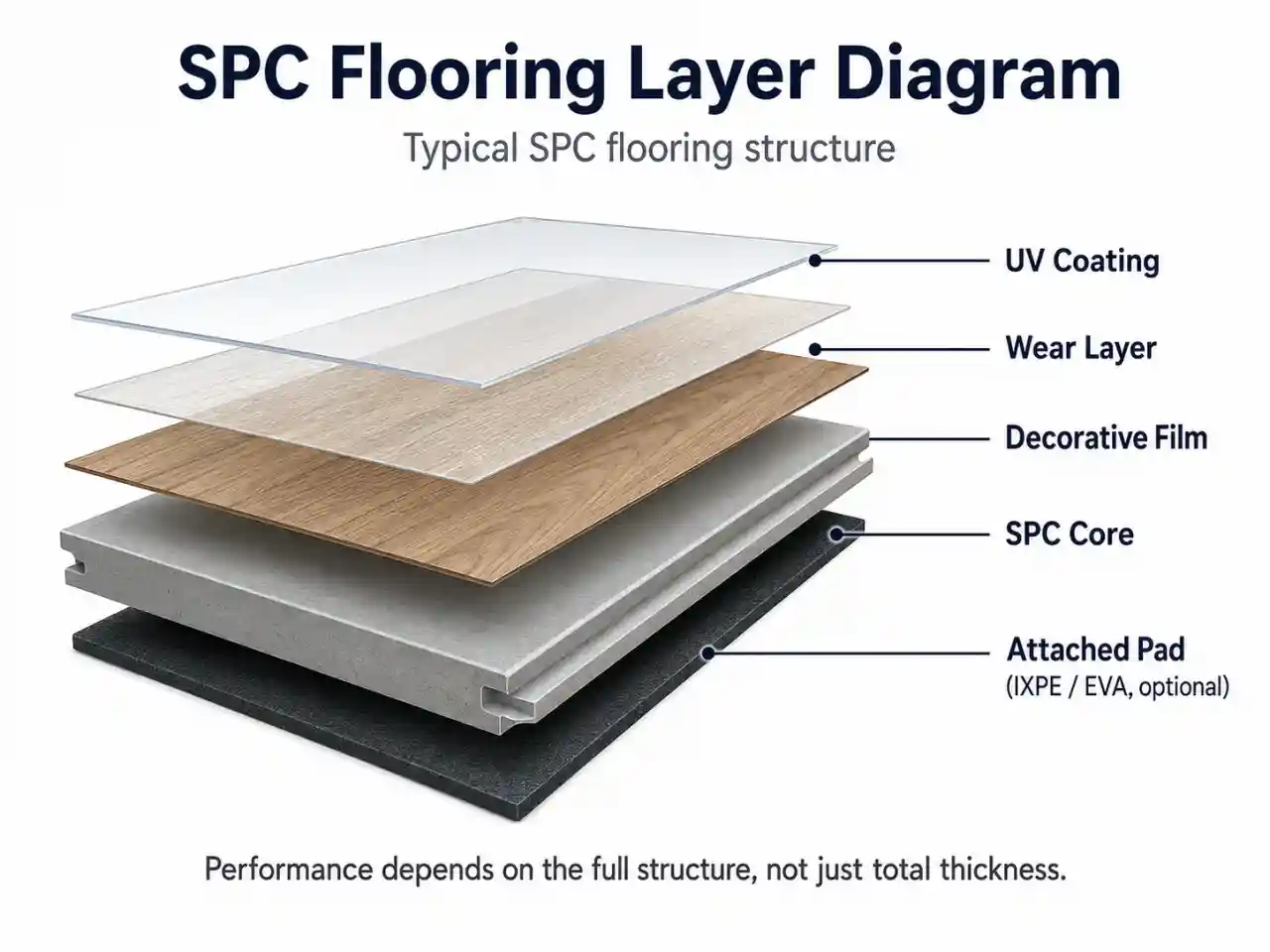
SPC stands for stone plastic composite. The core is made from calcium carbonate and PVC, pressed into a rigid board. That rigid structure is the foundation of the category — and understanding it is the starting point for understanding the rigid core vinyl flooring benefits that buyers and specifiers actually care about.
In practical terms, the core material has a few clear implications:
Compared with standard flexible LVT (without a rigid core): SPC is stiffer underfoot and generally more tolerant of minor subfloor imperfections under normal project conditions. That said, LVT without a rigid core has its own strengths — it offers a slightly softer, warmer underfoot feel, and it is well suited to glue-down applications on thoroughly prepared subfloors. For certain residential applications, LVT is the right call. For projects where subfloor consistency is harder to guarantee, or where a floating floor is preferred, the rigid core is an advantage.
Compared with laminate and solid hardwood: The key difference is moisture. The SPC core does not absorb water the way HDF-core laminate or solid wood does. In humid climates, coastal regions, and wet-area fit-outs, this removes a category of failure risk that laminate and hardwood both carry. That is not a marketing claim — it is why SPC has displaced laminate in a significant portion of hospitality and residential renovation projects over the past decade.
The advantages of SPC flooring that follow from this construction are real and worth explaining clearly to your buyers and specifiers. They are also conditional — which is what the rest of this article addresses.
SPC Flooring Advantages — From a Sourcing and Project Perspective
The table below organizes the main advantages for trade buyers. The same advantage often means something different depending on whether you are importing and reselling, or specifying and installing.
| Advantage | For importers | For project buyers | Confirm before ordering |
|---|---|---|---|
| Waterproof rigid core | Broader catalog reach for humid and coastal markets | Suitable for bathrooms, kitchens, basements, hospitality | cover subfloor moisture and sealing |
| Dimensional stability | Fewer after-sales issues across varied climates | Less post-installation movement risk | Confirm the product is validated for your target climate range |
| Click-lock installation | Easier installation story for your customers | Can reduce labor time on large fit-outs | Confirm subfloor flatness tolerance — speed depends on preparation |
| Wear layer durability | Positions your line for commercial and residential use | Determines what traffic levels the floor can actually handle | Confirm wear layer thickness and the use class recommended for your application |
| Design range | Serve multiple market segments from one supplier | Match design briefs without natural materials | Confirm available colors, textures, and MOQ per design |
| Fire classification | Supports regulatory compliance in EU, AU, UK markets | Required for certain building types | confirm which SPC construction was tested |
Waterproof Core — What It Means in Practice
The SPC core does not absorb water. For importers selling into coastal markets or high-humidity regions, that is a meaningful advantage over laminate alternatives — fewer post-sale complaints and a more defensible product story.
For project buyers, the waterproof core matters most in wet areas and hospitality fit-outs. The caveat worth stating clearly: a waterproof core does not guarantee a waterproof installation. Standing water at joins, inadequate moisture control beneath the floor, or poorly managed transitions at bathroom thresholds can all cause problems regardless of what the core is made of. Installation guidance needs to cover these points, especially for contractors who are new to floating vinyl systems.
Wear Layer and Durability — The Specification That Actually Matters
This is the most commonly misunderstood point among buyers evaluating SPC flooring for commercial projects. The general durability advantage over laminate is real, but the actual performance of any SPC floor depends primarily on the wear layer — not the core alone.
A thin wear layer in a high-traffic hotel corridor will not perform the way the product description implies. A heavy wear layer for a residential bedroom is more than the project requires. The right specification for the right application is the actual advantage here. When a buyer asks which product to order, the first question should be what the floor will be used for — not which total thickness is available.
Project Type Fit — Where SPC Works Well
SPC flooring covers a wide range of projects, but “suitable” is always specification-dependent.
Residential apartments and hotels: SPC with an attached IXPE or EVA pad is a common specification. The pad reduces sound transmission and provides a more comfortable underfoot feel. Whether an additional separate underlay is needed depends on the project’s acoustic requirements and the locking system’s compatibility — not every combination works well.
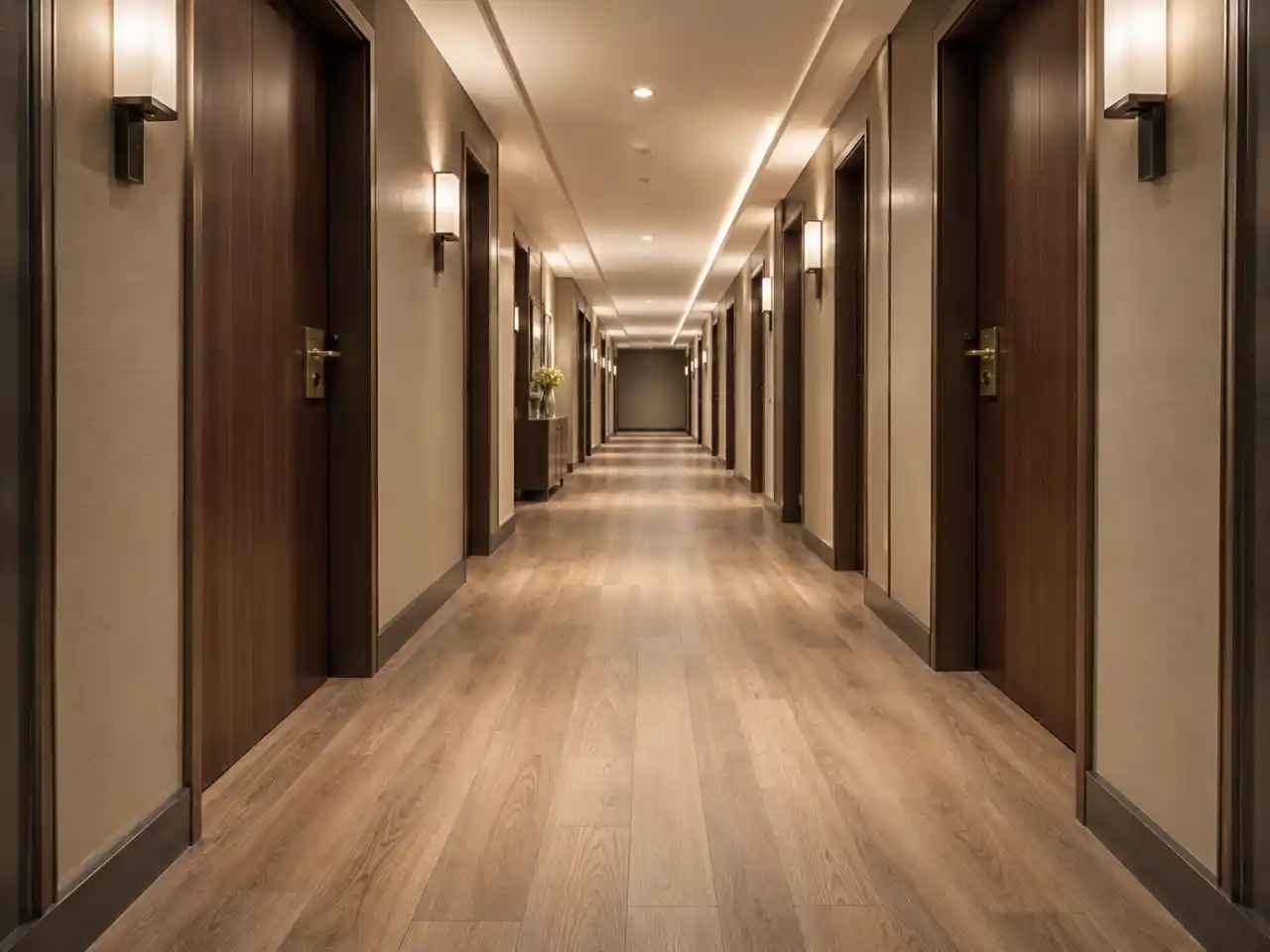
SPC flooring is widely used in hospitality and commercial projects. Wear layer selection for high-traffic areas like this should be confirmed with your supplier.
Retail and light commercial: Wear layer selection is the critical decision. Wheeled trolleys, display fixtures, and concentrated foot traffic apply different loads than a standard walkway. Confirm the use class the supplier recommends for your traffic level and ask for documentation.
Office spaces: Generally a more forgiving specification, but check castor chair performance before committing if open-plan seating with wheeled chairs is planned. Not all SPC products are tested for this — it depends on surface coating and the specific product data.
Renovation projects: The option to float over an existing hard floor without demolition is a genuine advantage in occupied buildings where minimizing downtime matters. Verify floor height clearance at thresholds and confirm the existing surface is stable and level enough. Not every substrate qualifies.
When SPC Flooring Advantages May Not Be Enough
Experienced buyers have seen at least one project where an SPC advantage did not show up as expected. A few situations that cause this are worth being direct about.
Wrong specification for the application. A floating floor where a glue-down was appropriate, or a thin wear layer in a high-traffic space — the product may pass every test and still underperform because the specification was wrong from the start.
Subfloor not properly assessed. SPC handles minor imperfections better than laminate or hardwood, but not a badly unlevel, wet, or structurally unsound subfloor. The advantage applies above a minimum standard of preparation, not in place of it.
Underlay incompatibility. Certain combinations of underlay thickness and locking system create instability or locking failures over time. If end customers are choosing their own underlay, they should confirm compatibility with the supplier before installation.
Certification claims not verified. An importer who passes on a “FloorScore certified” or “Bfl-s1 fire rated” claim without checking the original report creates risk downstream. Test results belong to a specific product, construction, and tested sample — not a whole product range. The claim is only as solid as the report scope.
Supplier inconsistency between orders. The advantages of SPC as a category depend entirely on whether the factory produces to the same standard across repeat orders. A correctly specified product that is variably produced delivers none of the advantages at scale.
What to Confirm Before Sourcing or Specifying SPC Flooring
Specification questions to ask your supplier:
- What wear layer thickness and use class is recommended for my application?
- What is the subfloor flatness tolerance for this product?
- Is a separate underlay compatible with this product, or is the attached pad sufficient?
- What temperature and humidity range has this product been validated for?
Certifications and test reports:
If your market or project requires specific documentation, ask for the original report — not a catalog summary. For EU projects, a Declaration of Performance under the Construction Products Regulation covers reaction to fire classification, formaldehyde emission class, and slip resistance. For projects where indoor air quality documentation is required, buyers may ask for FloorScore or an equivalent VOC emission report. UK projects may require BS 476 fire classification.
SPC flooring lines with FloorScore certification and EU CPR test results are available. The scope of those reports — which product construction they cover and their current validity — must be confirmed for the specific product you are ordering. Certification does not extend automatically across an entire product range.
Sample and bulk consistency:
Agree on a pre-production sample confirmation process before production starts. The approved sample is the reference for the bulk order. On large or repeat orders, keep the original sample and reference it at each reorder. Color and specification consistency matters far more across a large project than it does on a small trial order.
Working With a Factory That Knows SPC
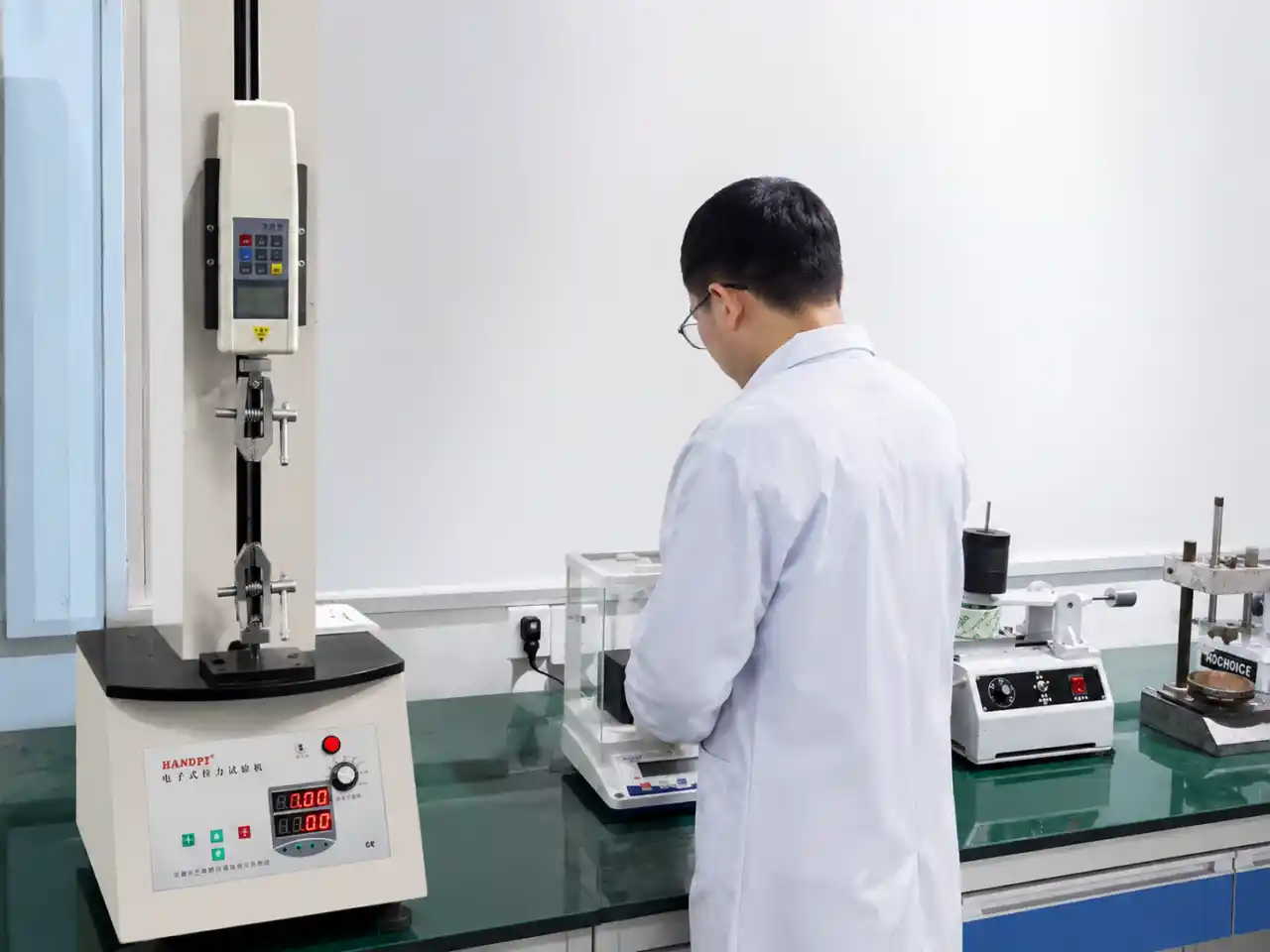
Factory QC — from raw material inspection through locking system testing — determines whether specification-sheet advantages carry through to bulk production.
Green Covering has been manufacturing SPC and LVT flooring for over 17 years. That experience is practical rather than decorative: we have seen which specification decisions tend to create problems downstream, and what it takes to keep bulk production consistent with approved samples.
Our QC process covers raw material inspection, production monitoring, lock strength testing, internal stress release, and anti-warping checks at the finished product level. For importers and brands sourcing factory-direct, that means specification details are not diluted through intermediaries, and any issue can be addressed at the source.
If you are sourcing SPC flooring for an import program or a specific project, the most useful starting point is a conversation about your specification requirements — not a general catalog.
Frequently Asked Questions
Is SPC flooring actually waterproof, or is that a marketing claim?
The rigid core does not absorb water — that part is accurate. A waterproof floor system, however, also requires correct subfloor moisture management, proper perimeter sealing, and well-executed transitions at wet areas. The core is one part of that system.
What wear layer do I need for a commercial project?
It depends on the traffic type and use case. A hotel guestroom, a hotel corridor, and a retail floor all have different requirements. Ask your supplier what use class the specific product supports for your application, and request documentation if you are specifying for a regulated or high-liability project.
Does SPC flooring always need a separate underlay?
Not always. Many SPC products come with an attached IXPE, EVA, or cork pad that is sufficient for most applications. Whether additional underlay is needed depends on acoustic requirements, subfloor condition, and locking system compatibility. Double underlay is not always an improvement and can cause locking instability with certain products.
What certifications should I ask for when importing SPC for EU projects?
The standard documentation for EU projects is a Declaration of Performance under the Construction Products Regulation, covering fire classification, formaldehyde emission class, and slip resistance. For indoor air quality requirements, FloorScore or an equivalent VOC emission report is the common request. Always confirm the report covers the specific product and construction you are ordering.
How do I make sure bulk orders match the sample I approved?
Agree on a pre-production sample confirmation process before production starts, with both sides signing off on the sample as the bulk reference. For repeat orders, keep the original approved sample and reference it at each reorder.
If you are sourcing SPC flooring for import or specifying it for a project, the most useful starting point is a conversation about your requirements.
Green Covering supplies SPC flooring to importers, distributors, flooring brands, and project buyers across 45+ countries. We can provide product samples, specification guidance, and the relevant test documentation for your market and project type.
[Contact Green Covering to discuss your SPC flooring requirement →]